
Table of Content
Contents
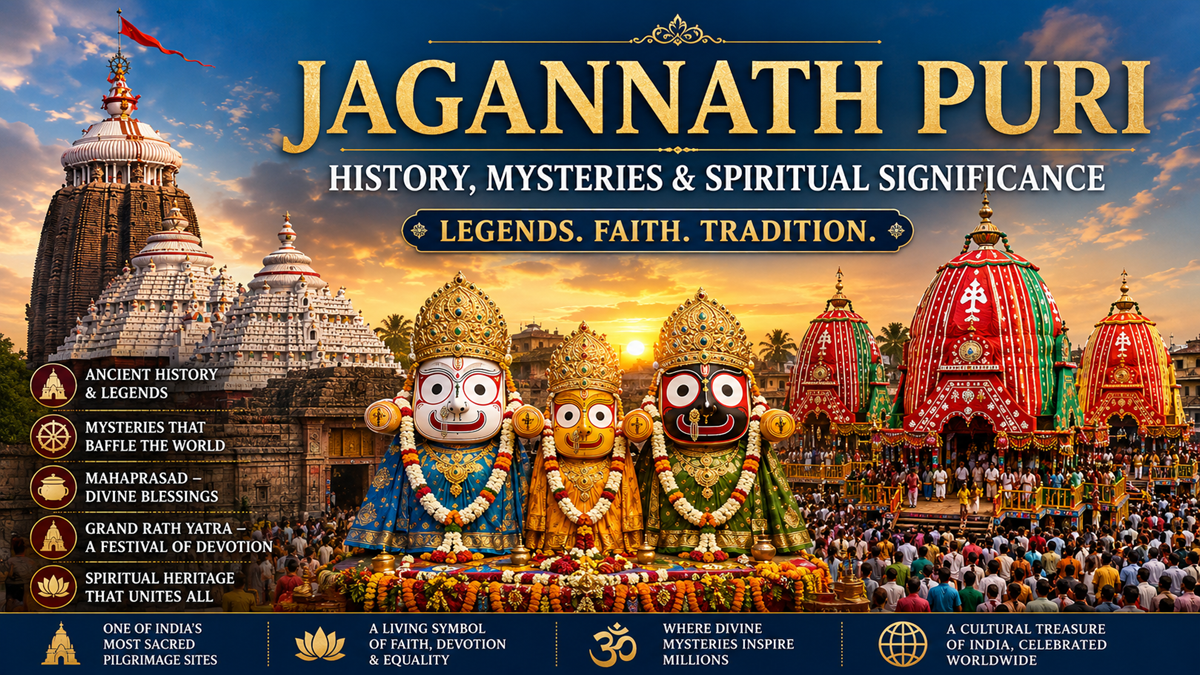
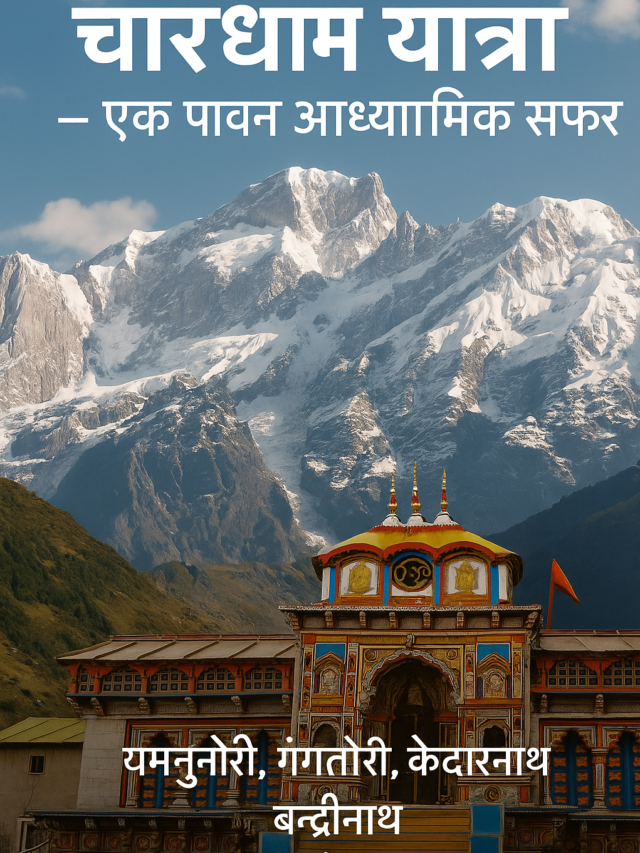
Jagannath Puri Temple is situated on the beautiful beaches of Odisha and is known as one of the best places of pilgrimage in the whole of the country. Devoted to Lord Jagannath, who is a form of Lord Vishnu (Krishna), it has attracted a large number of pilgrims and tourists from every corner of the world. Along with Badrinath, Dwarka, and Rameswaram, it forms the Char Dham, one of the most sacred places of pilgrimage in Hinduism.
The unique quality of Jagannath Puri lies not just in its great spiritual standing, but also the numerous legends and secrets related to it. The distinctive wooden images of Lord Jagannath, Balabhadra, and Subhadra are the most obvious manifestations of this ancient tradition, along with the famous Rath Yatra celebrated here. The temple’s architecture, rituals, and age-old customs have surprised not only historians and architects but also people of science as well as pilgrims.
In this article, we will explore the fascinating history, enduring legends, architectural brilliance, and intriguing mysteries that have made Jagannath Puri one of India’s most iconic temples.
The History of Jagannath Puri Temple
The History of Jagannath Puri Temple is believed to be more than a thousand years old. However, the spiritual origins of Jagannath Puri Temple may be even older. Ancient Hindu scriptures including Skanda Purana, Brahma Purana, and Padma Purana mention Purushottama Kshetra, presently known as Puri. The scriptures describe it as one of the holiest places where Lord Vishnu could be found in the form of Lord Jagannath.
Traditionally, the story begins with King Indradyumna of Malwa, who was a great devotee of Lord Vishnu. He wished to worship the Lord in His actual form. The king was directed by divine visions to go to the eastern side of India after learning about the unknown God known as Nilamadhava, who is worshipped by tribal people in secrecy.
Even though the King made all possible efforts, he could not find God. Yet, the King performed rigorous penance to prove his devotion. It is said that God Vishnu came in his dreams to show him how to build the huge temple. God advised the King that some divine wood would wash ashore and later be used to make His idols.
The temple was originally built in the 12th century by the Eastern Ganga ruler Anantavarman Chodaganga Deva. The successors carrying out his plans completed the magnificent temple and changed Puri into a major center of Hindu pilgrimage.
It has become an important religious institution, cultural institution, and economic institution over the centuries. Despite the invasions and continuous political upheavals, the many kings and priests, and fans of the temple never gave it up. Today, Jagannath Puri is not only a place of worship but also serves as the representative of India’s spiritual heritage.
The Legend of Lord Jagannath
The legend of Lord Jagannath is among the most captivating stories in Hindu mythology and beautifully illustrates the idea that the Divine transcends conventional forms.
The most prevailing belief is that King Indradyumna got the divine order to establish the temple, and the sacred wood appeared on the shore of the ocean as had been predicted. However, no ordinary carpenter would be able to carve statues out of that wood.
Vishwakarma, the divine architect of the deities, came in the form of a senior woodworker. He said he would create the idols under one condition: that he would work alone in secrecy for 21 days until it was complete. Anyone who tried to open the door before the work was done would definitely scare him away.
For many days, the king and the queen waited with great patience. But then, after they had not heard a sound from the inside for a long time, Queen Gundicha became worried and feared that something terrible had happened. Unable to suppress their anxiety, the royal family opened the door before the time was due.
Vishwakarma vanished to their surprise, leaving the unfinished wooden idols of Lord Jagannath, Lord Balabhadra, and Goddess Subhadra in their wake. The deities had incomplete feet and hands, but they were incredible because of their divine aura.
Initially, the king was distressed that the idols remained unfinished. However, a divine voice reassured him that this was the Lord’s chosen form and that the idols should be worshipped exactly as they were.
Numerous researchers view these incomplete forms as deep religious symbols. They claim that some incomplete organs remind worshippers that God does not correspond to any human standards of attractiveness and excellence. Rather, Lord Jagannath is viewed as an infinite and merciful being who takes care of all people irrespective of their status.
This inclusive philosophy continues to make Lord Jagannath one of the most universally loved deities in Hinduism.
The Unique Architecture of Jagannath Temple
Jagannath Puri Temple is an outstanding example of the Kalinga style of temple architecture, renowned for its soaring towers, intricate carvings, and harmonious proportions.
The area of the temple is in excess of ten acres and is surrounded by thick fortified walls which protects the various shrines, halls, and temples. In the center of the temple complex is the great Vimana (Sanctum Tower), which rises to around 65m (214ft) into the sky.
At the summit of the imposing shikhara is the sacred Neel Chakra. This unique eight-spoked wheel is made of an exclusive alloy and is considered sacred, representing that of Lord Vishnu. Faithful worshippers think that seeing the Neel Chakra from a distance and praying gives them merit.
As you enter the temple, you are greeted by the Aruna Stambha, which is a historic monolithic pillar. The pillar originally belonged to the Konark Sun Temple before being transported to Puri. Now it adds another level of historical value to the temple complex.
The temple features several important halls, including:
- Jagamohana (Assembly Hall): Where devotees gather for worship.
- Nata Mandapa (Festival Hall): Traditionally used for devotional music and dance performances.
- Bhoga Mandapa (Offering Hall): Where offerings prepared for the deities are presented before distribution as Mahaprasad.
The temple walls are adorned with exquisite carvings depicting celestial beings, floral motifs, mythological scenes, and geometric patterns that showcase the artistic brilliance of medieval Odisha.
Despite centuries of exposure to coastal weather, the temple remains one of India’s finest examples of sacred architecture and engineering.
The Mysteries of Jagannath Puri Temple
Jagannath Puri Temple is famous not only for its spiritual significance but also for several fascinating mysteries that continue to inspire curiosity and devotion.
The temple flag, which reportedly flutters in a direction that contradicts the direction of the wind, is one of the most widely talked-about beliefs. For believers, this signifies God Jagannath’s divine strength. Even if the climatic conditions have some role to play in making the flag move in a particular way, its appearance adds to the temple being a place of amazement.
Another enduring mystery is the Neel Chakra. Visitors often observe that it appears to face them regardless of where they stand around the temple complex. This striking visual effect has inspired both devotional interpretations and architectural analysis.
According to local tradition, birds are not often seen flying directly over the main area of the temple. Although science has not established any reliable basis for this belief, this is just one of the many anecdotes surrounding Jagannath Puri.
The temple is also famous for its remarkable ceremonies, most of which have not changed in centuries. These customs remain alive through generations of hereditary servants, which makes the atmosphere of the temple highly spiritual and gives it its status as a center of faith.
For millions of devotees, these mysteries represent not problems to be solved but manifestations of divine grace. Whether one looks at them through faith, history, or architecture, Jagannath Puri is a source of wonder.
The Sacred Wooden Idols and the Nabakalebara Ritual
A unique feature of the Jagannath Temple is that the deities Lord Jagannath, Lord Balabhadra, Goddess Subhadra, and the Sudarshana Chakra are made from special wood, specifically neem wood, or Daru wood. While many Hindu temples use stone or metal idols to represent their deities, the wooden idols here represent the cycle of life, death, and rebirth.
Nabakalebara is the most important rite linked to the idols, which stands for “new body.” This uncommon ceremony is conducted in years when there are two months of Ashadha on the luni-solar calendar, which usually happens every 12 to 19 years.
The ceremonies start with the Banajaga Yatra. In this step, a group of designated priests goes in search of the sacred neem trees. These trees have to fulfill certain traditional criteria such as special markings in nature, not being far from certain places deemed as sacred, and being healthy and not damaged. After finding these trees, it is necessary to cut them ceremoniously and bring them to the temple.
Great artisans work on creating new gods in the temple and still keep everything confidential and carry out the old rituals. One of the most sacred moments is when Brahma Parivartana takes place, the time when the mystical spiritual essence named Brahma Padartha is transferred from the old idols to the new ones. Only a few temple priests have an idea what this particular element is, which makes this tradition one of the most secret ones.
Once the idols have been transferred, the old wooden idols are buried in a sacred manner in the temple premises, which marks the end of one spiritual cycle and the beginning of another. The Nabakalebara is said to connote renewal, continuity, and the eternity of God.
Rath Yatra: The Grand Chariot Festival
The Jagannath Rath Yatra is among the oldest and biggest religious festivals celebrated all over the world, inspiring millions of people to visit the festival every year. The festival is observed in the month of Ashadha according to the Hindu calendar (June-July) and commemorates the yearly journey of Lord Jagannath, Lord Balabhadra, and Goddess Subhadra from the Jagannath Temple to the Gundicha Temple which is believed to be the residence of their aunt.
The deities travel in three magnificent wooden chariots, each newly constructed every year using traditional methods and specific types of wood.
The three chariots are:
- Nandighosha – Chariot of Lord Jagannath
- Taladhwaja – Chariot of Lord Balabhadra
- Darpadalana (Devadalana) – Chariot of Goddess Subhadra
Numerous worshipers drag these huge carts via sturdy ropes, believing it to be a great divine gift. In Hinduism, it is thought that taking part in – or, at least, watching the event of the Rath Yatra brings one immense spiritual benefits.
The most significant ceremony held during the festival is the Chhera Pahanra, which comprises the act of the Gajapati King of Puri sweeping the chariot platforms using a golden broom. This action depicts the concept of being humble and respecting the idea of equality in front of the Divine.
The festival has inspired similar celebrations in many parts of India and around the world, making Jagannath’s message of devotion and inclusiveness a truly global tradition.
Mahaprasad: The Divine Kitchen of Jagannath Temple
Jagannath Temple is famous for having one of the biggest temple kitchens in the globe. Hundreds of chefs along with their helpers cook food in this temple every day for thousands of followers according to old methods that have been maintained for many years.
The kitchen has hundreds of clay stoves in which food is cooked in clay pots stacked upon each other. Interestingly enough, devotees believe that the food in the highest pot is the first to be cooked, a phenomenon that is one of the wonders of this temple as people refer to it. Although there are explanations related to steam and heat circulation, this remains one of the important elements of culture.
A plethora of vegetarian food items called Mahaprasad is prepared at this temple, which includes items like rice, dal, vegetables, sweets, and other regional Odia specialties. These food items are first offered to Lord Jagannath and then given to the devotees.
Evident from Mahaprasad is a practice that depicts the nature of sharing in a religious culture, as it brings people of various communities and backgrounds together to partake in whole-hearted eating, with no restrictions or limitations imposed on who can partake in the food being served.
For countless pilgrims, partaking in Mahaprasad is not merely a meal but a deeply spiritual experience that strengthens their connection with the Divine.
Rituals and Daily Worship
The activities of the individuals living inside the Jagannath Temple are centered on various daily customs, which take place before daylight and continue until midnight. This tradition has been carried forward by generations of the Sevayats, the hereditary workers of the temple.
The day starts with Mangala Aarti, which is performed to wake up the deities with prayers, lights, and bhajans. Various offerings of food to the deities are made throughout the day, in addition to dressing them in new clothes and jewelry and performing different rituals.
Some important daily ceremonies include:
- Mailam (changing the deities’ attire)
- Abakasha (morning purification rituals)
- Gopala Ballava Bhoga (morning offering)
- Raj Bhoga (main afternoon meal)
- Sandhya Aarti (evening worship)
- Badasinghara Besa (night adornment)
During the whole year, the temple also observes a number of religious occasions including Snana Yatra, Chandan Yatra, Dol Yatra, and the grand Rath Yatra festival. Each festival emphasizes a different aspect and dimension of Lord Jagannath’s personality.
Jagannath Temple Through History
The Jagannath Temple has witnessed centuries of political change while remaining a powerful center of faith.
In the medieval era, the temple was exposed to a number of invasions from foreign armies. The sacred idols were moved on many occasions, according to historical records and traditions of the temple, in order to ensure their safety and prevent loss.
There have been many different dynasties in the past in this region. Some of these dynasties are – Eastern Gangas, Gajapatis, Mughals, Marathas, and even afterwards the British Empire. However, the temple maintained its importance and continued to have people coming from all over India as devotees.
Temple administration was restructured according to Indian legislation after the country gained independence, preserving the centuries-old traditions and rituals. The Jagannath temple is regarded as one of the most significant living heritage sites in India.
Cultural Influence of Jagannath Puri
Cultural heritage of Odisha is closely associated with Jagannath Puri for many centuries. The temple has been an inspiration to various arts such as Odia literature, devotional music, classical dancing, painting, and many more folk traditions.
The famous Pattachitra paintings often depict scenes from Lord Jagannath’s life, the Rath Yatra, and other temple rituals. These vibrant artworks have become symbols of Odisha’s artistic heritage.
The temple influences different parts of the world through organizations and communities that commemorate the Rath Yatra in cities located in Europe, North America, and Asia. Therefore, Lord Jagannath has become a worldwide symbol of faithfulness, inclusiveness, and intercultural exchange.
Visiting Jagannath Puri Temple
Puri has got comprehensive road and rail services as well as air services. The nearest airport is Biju Patnaik International Airport at Bhubaneswar, which is about 60 km from Puri. Buses and taxis are available to travel to the temple town from there.
Best Time to Visit
The best time to come here is from October to February, as the weather is nice then. However, if you want to feel the significance of the Rath Yatra, you will need to come in June or July; the town will, however, be very crowded at that time.
Temple Guidelines
Visitors should:
- Dress modestly and respectfully.
- Follow temple customs and security regulations.
- Maintain silence and cleanliness within the premises.
- Respect photography restrictions in areas where photography is prohibited.
Nearby Attractions
While in Puri, visitors can also explore:
- Konark Sun Temple – A UNESCO World Heritage Site renowned for its magnificent stone architecture.
- Chilika Lake – Asia’s largest brackish water lagoon, famous for migratory birds and Irrawaddy dolphins.
- Golden Beach – A clean and scenic Blue Flag-certified beach ideal for relaxation.
- Raghurajpur Heritage Village – Celebrated for its Pattachitra artists, traditional crafts, and cultural performances.
These destinations enrich the overall travel experience and showcase the diverse heritage of Odisha.
Lesser-Known Facts About Jagannath Puri
- The temple complex covers over 10 acres and contains numerous shrines and sacred structures.
- The Neel Chakra atop the temple is made from a special alloy and is regarded as one of the temple’s holiest symbols.
- Every year, the three massive Rath Yatra chariots are built anew using traditional craftsmanship.
- The Mahaprasad tradition reflects the temple’s emphasis on equality, as devotees from all backgrounds share the same sacred food.
- The Jagannath Temple has preserved many rituals for centuries, making it one of India’s oldest continuously active centers of worship.
Read More Articles👉: Rajgir Malmas Mela, Shilpa Shastra, 10 Hidden Places in India, National Fruit of India… etc
Conclusion
Not only is Jagannath Puri a religious site, but it also embodies India’s religious, cultural, and historical prominence. The ancient story of King Indradyumna, the wooden idol with all its intricacies, the grandeur of Rath Yatra, and the timelessness of Nabakalebara- every aspect of its traditions reveals a deep belief in and respect for history.
The outstanding construction of the temple, sacred ceremonies, lively festivals, and time-honored traditions have motivated numerous people, including pilgrims, researchers, artists, and tourists throughout history. Although many tales related to the Jagannath temple are linked to faith and folklore, they are still an essential part of the temple’s image.
Jagannath Puri is an unforgettable destination in India whether you visit for communion with the higher powers, to admire its stunning architecture, or to learn about its captivating past. It is a significant addition to the list of India’s civilization legacy, where faith, culture, art, and community blend into one of the most revered pilgrimage sites of this country.

Subscribe to Our YouTube Channel: https://www.youtube.com/@BhartiSanskriti-BS