
Table of Content
Contents
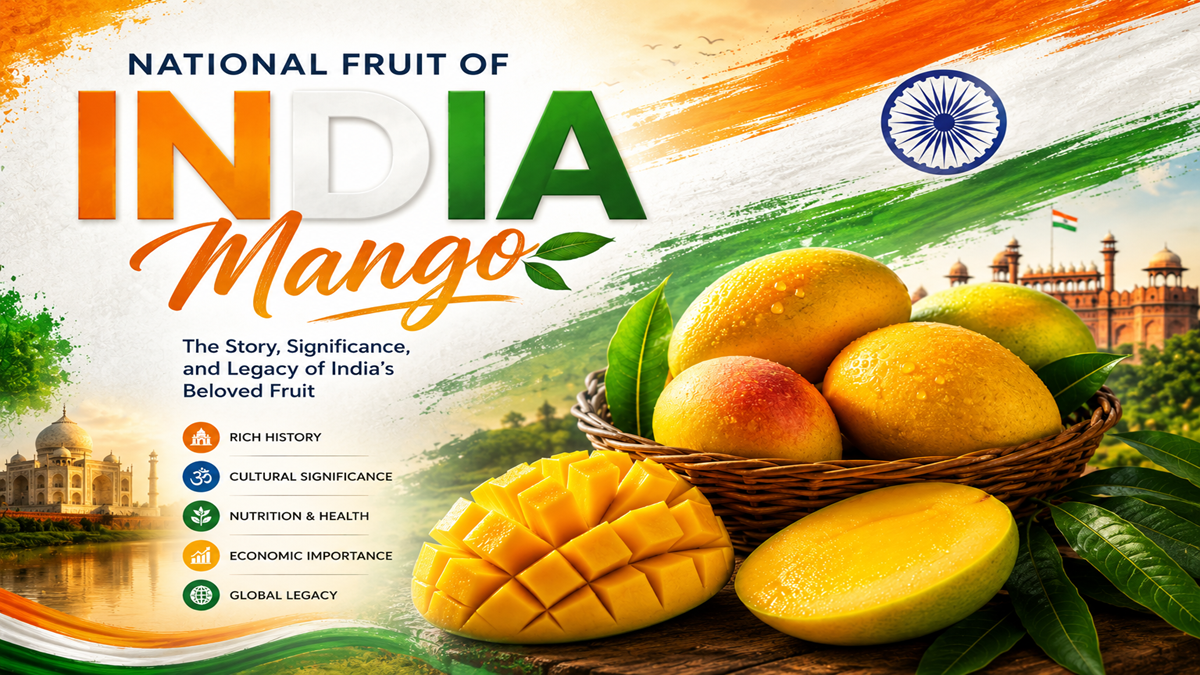
Diversity can be found in every aspect of Indian culture, tradition, geography, and food. As one of India’s many national symbols, the mango, often referred to as “The King of Fruits,” is not only a succulent tropical fruit; it exists throughout the historical, cultural, agrarian, and emotional aspects of Indian society.
The mango symbolizes wealth, flavor, and plenty throughout history- from historical texts or royal gardens to today’s home kitchens and global trade markets. The mango is eaten as juicy slices in the summer, made into pickled fruit and desserts, and used in worship. The mango has a unique status in each Indian household.
This article explores the fascinating journey of India’s national fruit — its history, significance, varieties, nutritional value, economic importance, and cultural legacy.
What is the National Fruit of India?
The mango is known as the national fruit of India. Its scientific name is Mangifera indica, which is an Anacardiaceae family tree. It is believed the mango originated from the Asian continent in & around what’s now considered India, Myanmar & Bangladesh, where there has been a long history of growing them. India is still considered the largest producer of mangoes.
Mangoes are regarded for their great sweetness, brilliant colors, smell that is hard to resist, and superb variety. They have an assortment of all different shapes, sizes, and flavors; for example, mangoes can be tangy (with a lot of fiber) or buttery smooth and honey-like sweet.
People will see that in India, they always associate the mango with Summer because the temperatures rise throughout the whole country. There are so many mangoes in the markets that there is often a lot of excitement from kids as well as adults. In many people’s minds, if you did not eat mangoes every summer, then you had a summer that was not full.
Why Mango Was Chosen as the National Fruit of India
The mango was chosen as the National Fruit of India (officially adopted in 1950) because of its immense cultural, historical, and agricultural importance. Few fruits are as deeply connected to Indian identity as the mango, also known as the “King of Fruits.”
How widely accepted in all parts of India is a key factor contributing to its recent world recognition; mangoes are grown throughout India from the Himalayas down to the southern seaboard, and the country produces internationally renowned varieties as well as many local ones, and has unique ways to consume them or present them (i.e. desserts).
Mangoes are a representation of prosperity, fertility, joy, and abundance in Indian cultures. Mangoes and mango trees are found in many ancient Indian poems, stories, paintings, and religious ceremonies. The fruit has come to be associated with wealth and celebrating for many centuries now.
Its universal appeal played another important role. Mangoes are loved by people across all social, linguistic, and regional backgrounds. Whether in rural villages or metropolitan cities, the fruit is cherished everywhere.
Historical Roots of Mango in India
Mangoes originated in South and Southeast Asia; more specifically, mangoes were cultivated in northwestern Myanmar, Bangladesh, and northeastern India. It is believed that the first mangoes were cultivated in India approximately 4,000 – 5,000 years ago.
The ancient Sanskrit scriptures describe the mango as a sweet and beautiful fruit; it has been mentioned in Hindu texts, Buddhist scriptures, and ancient Indian poetry. Many experts believe that the mango originated in India and was later cultivated in other parts of Asia and throughout the world.
In Buddhist culture, mango trees symbolize spirituality. According to legend, Gautama Buddha would meditate under mango trees given to him by devotees. These peaceful gardens were used for contemplation and teaching purposes.
Mangoes were also supported by the royal class during the Medieval period in India; the Mughal Emperors loved mangoes and encouraged extensive and large areas to be planted with mangoes (for example, Akbar planted a famous mango tree plantation called Lakhi Bagh, which was said to have grown more than 100,000 mango trees in what is now Bihar).
Royal courts often exchanged prized mango varieties as diplomatic gifts. Certain mangoes became symbols of prestige and luxury among rulers and nobles.
Mango seeds were carried to Southeast Asia (around the 5th century BC), Africa and the Middle East (around the 10th century AD), and eventually Europe and the Americas over many years by traders and travellers. Today, mangoes grow all over the world. However, they have their cultural origin in India.
Cultural and Religious Significance of Mango
The mango occupies a sacred and symbolic place in Indian culture. It is not merely consumed as food; it is also associated with spirituality, rituals, and celebrations.
Mango Leaves in Rituals
In Hindu traditions, mango leaves are thought to be lucky and are often used in decorating altars or doorways with garlands (torans) for special occasions such as Diwali, weddings, new homes, and religious ceremonies. Mangos represent good fortune, wealth, and positive energy to name a few.
Symbol of Fertility and Good Fortune
The mango tree symbolizes fertility, love, and prosperity. As per Indian mythology, the blossoming of mango flowers symbolizes the advent of the spring season and is celebrated as an occasion of life.
Presence in Art and Design
The well-known paisley design found in Indian textile & embroidery is thought to have its origins in the shape of the mango fruit. It has become a worldwide symbol of Indian decorative art since its inception.
Religious Offerings
The mango fruit is often used in religious offerings. The sweet taste of the mango is regarded as symbolizing devotion and blessings from God.
Popular Varieties of Mango in India
India is home to more than a thousand varieties of mangoes. Each region takes pride in its unique local cultivars. Some are prized for their sweetness, while others are valued for aroma, texture, or juiciness.
Alphonso Mango
Many people refer to Alphonso mangoes as the “King of Mangoes” because of their incredible flavor and cream-like texture. These delicious mangoes are typically harvested throughout Maharashtra in the Konkan region, where they are grown mainly for their quality and price.
Dasheri Mango
Dasheri mangoes originate from Uttar Pradesh and are characterized by their oblong shape and sweet fragrance. They enjoy great popularity in northern India.
Langra Mango
The Langra mango is famous for its distinctive sweet-tart taste and green color even after ripening. It grows in the states of Uttar Pradesh and Bihar.
Kesar Mango
The Kesar mango primarily grows in Gujarat and is distinguished by its vivid orange pulp and fruity aroma. It is often referred to as the “Queen of Mangoes.”
Banganapalli Mango
Bangarapallam mangoes are grown in South India, especially in Andhra Pradesh. These mangoes are very big, sweet, and have low fiber content.
Totapuri Mango
Totapuri mangoes have a pointed structure, making them easily recognizable. They have a slightly sour flavor that makes them suitable for juices, pulps, and pickling.
Each mango variety reflects the geography, climate, and agricultural traditions of its region.
Major Mango-Producing States in India
India is the largest producer of mangoes in the world. Several states contribute significantly to the country’s mango production.
Uttar Pradesh
Uttar Pradesh is one of the largest producers of mangoes in India. The popular Dasheri and Langra varieties are grown in Uttar Pradesh.
Andhra Pradesh
Known for Banganapalli and Totapuri mangoes, Andhra Pradesh is a major center of mango cultivation.
Bihar
Bihar has been cultivating mangoes since ancient times, and it grows excellent mangoes such as the Jardalu and Langra varieties.
Maharashtra
The state is well known across the world for its Alphonso mangoes cultivated along its Konkan coast.
Gujarat
Kesar mangoes from Gujarat are quite famous and have a high demand for exporting.
Karnataka and Tamil Nadu
These southern states also contribute heavily to the mango production and processing industries.
India exports mangoes to countries across the Middle East, Europe, North America, and Southeast Asia. Indian mangoes have a good reputation in the international market because of their taste and quality.
Nutritional Value and Health Benefits
Mangoes are not only delicious but also highly nutritious. They contain essential vitamins, minerals, antioxidants, and dietary fiber that contribute to overall health.
Rich Source of Vitamins
Mangoes are packed with vitamin C, which helps strengthen immunity and supports healthy skin. They are also rich in vitamin A, important for eye health and immune function.
Good for Digestion
Mangoes have dietary fibers and digestive enzymes that assist with digestion and promote gut health.
Antioxidant Properties
Mangoes contain antioxidants such as beta-carotene and polyphenols, which help protect the body against oxidative stress.
Boosts Energy
The natural sugars present in mangoes serve as a great source of instant energy, thus making mangoes a perfect summer fruit.
Supports Skin and Hair Health
The vitamins and antioxidants found in mangoes contribute to glowing skin and healthy hair.
Because of their nutritional richness, mangoes are often considered one of the healthiest tropical fruits.
Mango in Indian Cuisine
Mangoes have a lot of versatility and are a crucial part of Indian cuisines
Raw Mango Dishes
Green mangoes can be used to make chutneys, pickles, curries, and refreshing summer drinks like aam panna. The tartness of green mangoes enhances the taste of most Indian dishes.
Mango Desserts
Matured mangoes can be added to desserts, smoothies, puddings, and cakes. Mango lassis, made from yogurt and mangoes, are quite popular throughout the country.
Pickles and Preserves
Pickles are made from the mango fruit in Indian homes using spices and oils. Pickles are highly valued in meals and are mostly made during the summer season.
Juices and Pulps
Mango pulp is widely used in drinks, sweets, preserves, and processed foods.
The fruit’s versatility makes it a staple ingredient in both traditional and modern Indian cooking.
Economic Importance of Mangoes
Mango farming provides livelihood options for several million Indian farmers. The mango sector boosts agricultural operations, commerce, transport, food production, and export markets.
Contribution to Agriculture
The cultivation of large mango farms creates employment for rural people. The activities of harvesting and packing mangoes offer livelihoods for innumerable people.
Export Industry
India exports its mangoes in fresh form or mango products to several countries. Some of the topmost Popular export destinations include the UAE, the UK, the USA, and Saudi Arabia.
GI-Tagged Mangoes
Several famous mango varieties have received Geographical Indication (GI) tags, which help preserve their authenticity and regional identity.
Examples include:
- Alphonso Mango (Hapus): Maharashtra
- Gir Kesar Mango: Gujarat
- Malihabadi Dusseheri Mango: Uttar Pradesh
- Laxmanbhog Mango: West Bengal
- Fazli Mango: West Bengal
- Khirsapati (Himsagar) Mango: West Bengal
- Banganapalle: Andhra Pradesh
- Appemidi Mango: Karnataka
- Kuttiattoor Mango: Kerala
- Mankurad Mango : Goa
- Zardalu Mango: Bihar
- Radul / Rataul: Uttar Pradesh
- Kari Ishad: Karnataka
These tags also boost export value and recognition.
Fascinating Facts About Mangoes
- India produces nearly half of the world’s mangoes.
- There are over 1,000 mango varieties found in India.
- Mango trees can live for hundreds of years and continue bearing fruit.
- The mango is also the national fruit of Pakistan and the Philippines in different contexts.
- Rabindranath Tagore and other Indian poets frequently mentioned mango blossoms in literature.
- Mango wood is often used in religious ceremonies and furniture making.
Challenges Facing Mango Cultivation
Despite its importance, mango cultivation faces several challenges.
Climate Change
Unpredictable weather patterns, rising temperatures, and irregular rainfall affect flowering and fruit production.
Pest Attacks and Diseases
Farmers often struggle with pests and fungal infections that damage crops.
Storage and Transportation
Mangoes are highly perishable and require proper storage and transportation facilities.
Export Restrictions
International quality standards and trade regulations can sometimes create barriers for exporters.
To address these issues, agricultural scientists and farmers are adopting improved farming techniques, better irrigation systems, and modern storage methods.
Explore Our More Articles👉: The National Emblem of India, The National Bird of India, The Cultural Richness of Majuli, Vasudhaiva Kutumbakam
Conclusion
India’s national fruit is the mango, and it is much more than just that. It is a representation of India’s vast history, large amounts of food produced, and cultural unity. This well-loved fruit has inspired poets for generations, as well as kings, fed families, and brought together people.
The mango is a large component of Indian identity, encompassing everything from a sacred ritual and cultivation of royal orchards to bustling summer markets and is produced for export around the globe; and its sweetness transcends all of India’s regions, allowing different individuals to come together in unity through shared memories and festivities held during the seasons.
As India progresses into today’s rapidly changing world, the mango has remained throughout history a beautiful representation of the bounty of natural resources and cultural heritage this country has. Each bite of a sweet ripe Mango contains a deep, rich heritage of cultural traditions and experiences spanning hundreds of years, which is precisely why it is so deserving of being named as India’s National Fruit.




Subscribe to Our YouTube Channel: https://www.youtube.com/@BhartiSanskriti-BS/