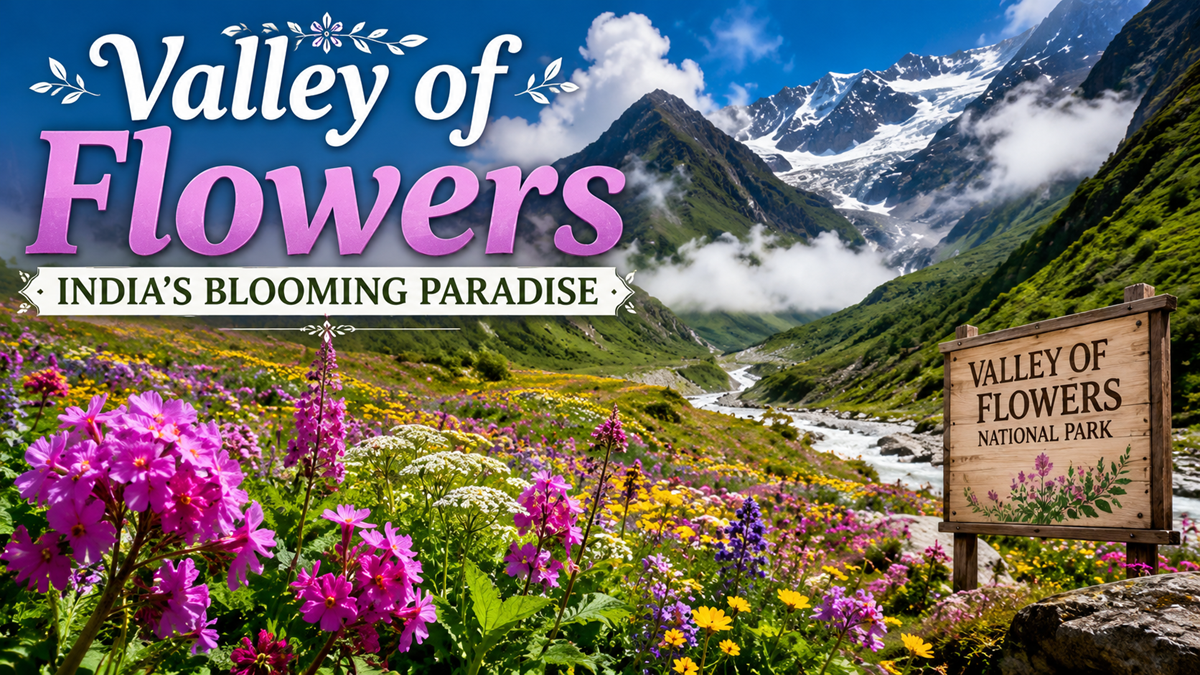

Nestled away in the Garhwal Himalayas region in Uttarakhand, where the mist covers the alpine meadows below the snow-laden mountains, there lies one of India’s most spectacular natural treasures, the Valley of Flowers National Park. Throughout the monsoons, this peaceful Himalayan valley turns into a beautiful spectrum of colorful wildflowers that make it look surreal.
The Valley of Flowers, popularly referred to as “India’s Blooming Paradise,” is also considered to be a place that is much more than beautiful. The place is known to be home to rare flora and fauna of the Himalayas and acts as a paradise for botanists and nature lovers alike. Moreover, the valley has also been referred to as an artistic expression of India’s wonderful ecological heritage.
Located at an elevation of around 3,250-3,650 meters (10,660-11,980 feet) above sea level, snow covers the valley for most of the year. However, as the monsoon settles in, thousands of flowering plants bloom in waves, turning the place into a riot of colors like pink, blue, yellow, purple, and white. This spectacle has enthralled adventurers, science buffs, photography enthusiasts, and religious pilgrims for centuries.
The Valley of Flowers is an incredible destination for anyone from adventure seekers considering trekking in the Himalayas to nature lovers intrigued by alpine environments and travelers looking for one of the most stunning spots in India. This article will highlight its captivating history, rich diversity of flora and fauna, and unusual terrain, as well as explain why it attracts visitors repeatedly.
Valley of Flowers at a Glance
Located in the Chamoli district in Uttarakhand, the Valley of Flowers National Park is said to encompass an area of around 87.5 square kilometers from Western Himalayas. The area measures close to 8 km in length and 2 km in width, thus making it one of the most remarkable high-altitude terrains in India.
This park is located in the Nanda Devi Biosphere Reserve, which is one of the most important protected areas in terms of ecosystem in India. The river Pushpawati is fed by clean and clear water, which is glacial and helps nurture various types of flowering plants and fauna.
Contrary to most of the national parks that experience visitors year-round, the Valley of Flowers National Park is open only for a limited duration, mostly between the months of early June to early October. During winter, heavy snowfall covers the valley, making it impossible to access.
Quick Facts
| Feature | Details |
| Location | Chamoli District, Uttarakhand |
| Elevation | 3,250–3,650 meters |
| Area | 87.5 sq km |
| UNESCO Status | World Heritage Site (2005) |
| National Park Established | 1982 |
| Nearest Base Village | Ghangaria |
| Nearest Airport | Jolly Grant Airport, Dehradun |
| Best Visiting Season | July to September |
| Trek Difficulty | Easy to Moderate |
The valley’s remote location has helped preserve its pristine beauty, making it one of the finest examples of Himalayan biodiversity.
The Fascinating History of the Valley of Flowers
Long before it gained international recognition, the Valley of Flowers was woven into the folklore and spiritual traditions of the Himalayan communities.
The people in the area thought the valley was home to supernatural forces; thus, people kept away from going deep into it as they believed it was a sacred ground. Stories tell how people who passed through the valley without displaying respect angered those forces who looked after the forests and flowers of the valley.
The valley has a connection to Hindu mythology as well. Many believe that Hanuman passed through the slopes of this region looking for the Sanjeevani plant mentioned in the Ramayana. While this mythical herb’s true location is still in doubt, the many medicinal plants that can be found in this area only encourage this belief.
The year 1931 was when the world came to know about the valley through British mountaineer Frank S. Smythe. He along with his fellow companions R. L. Holdsworth and Eric Shipton, happened to discover the valley accidentally while they were coming back from their successful expedition to Mount Kamet, the third-highest mountain in India.
Smythe was mesmerized by the never-ending expanse of beautiful flowers and eventually wrote the famous book “The Valley of Flowers” (1938), making this obscure paradise in the Himalayas known to all. His expressive words encouraged scientists, people who study nature, and travelers alike to know the area better.
The Government of India declared the Valley of Flowers a National Park in 1982, acknowledging its environmental significance. More than two decades later, in 2005, UNESCO incorporated the Valley of Flowers into the Nanda Devi and Valley of Flowers National Parks as a UNESCO World Heritage Site because of its high natural value and use in preserving Himalayan biodiversity.
Today, the valley stands as a remarkable example of successful environmental protection while continuing to inspire visitors with its timeless beauty.
Geography and Natural Landscape
Nestled in the Zanskar Range of the western Himalayan Mountains, the Valley of Flowers is surrounded by towering mountains with snow-covered peaks above 6000m. The majestic mountain ranges provide natural barriers that contribute to an alpine ecosystem housing flowering plants.
The glacier’s movement, which began thousands of years ago and carved the wide ranges of valleys, ended up forming the valley with meadows and lush plains. With time, glaciers melted away, thus enabling plants from higher ranges to grow due to fertile soil.
The Pushpawati River, which flows smoothly across the valley, is supplied by the melting glaciers and mountain streams. The number of waterfalls, streams, and aqueducts in the area makes it very rich in flora and fauna.
Throughout the year, the valley undergoes dramatic seasonal changes:
- Winter (October–May): Heavy snowfall covers the entire valley.
- Early Summer (June): Snow begins to melt, revealing fresh greenery.
- Monsoon (July–August): Peak flowering season transforms the valley into a colorful paradise.
- September: Flowers gradually fade as golden grasses prepare for winter.
The combination of alpine meadows, glaciers, forests, rivers, and rocky slopes makes the Valley of Flowers one of the most ecologically diverse mountain landscapes in Asia.
Why Is It Called India’s Blooming Paradise?
The title “India’s Blooming Paradise” is well deserved.
During the monsoon months, the Valley of Flowers becomes a living canvas where thousands of blossoms bloom in remarkable succession. Unlike a typical flower garden, where all flowers bloom simultaneously, the valley constantly changes its appearance throughout the season as different species flower at different times.
The national park has over 500 species of flowering plants documented by botanists. The valley’s shades of color undergo a change every few weeks, as it transforms from carpets of pink primulas and blue poppies to brilliant yellow daisies and delicate white anemones
Among the most notable flowering species are:
- Blue Himalayan Poppy (Meconopsis aculeata), admired for its striking blue petals.
- Cobra Lily (Arisaema species), known for its unusual hooded shape.
- Primulas, which create colorful patches across the meadows.
- Anemones, adding shades of white, purple, and pink.
- Himalayan Bellflower (Campanula species), recognized for its elegant bell-shaped blooms.
- Geraniums, Potentillas, Pedicularis, and many other alpine wildflowers.
Brahma Kamal, the state flower of Uttarakhand, is remarkably popular in the region but is mostly found in the high altitude near Hemkund Sahib and in the mountains adjacent to but not in the Valley of Flowers itself.
Numerous herbs with therapeutic properties can also be found in the valley, which are utilized in traditional healing in the Himalayas. Some of the important plant species include Aconitum, Dactylorhiza hatagirea, and Picrorhiza kurroa. Many of these plants are subject to protection measures due to the high number of endangered species.
This ever-changing floral display attracts botanists from around the world, who continue to study the valley’s unique alpine ecosystem and its response to climate change.
Flora and Fauna: A Biodiversity Hotspot
The Valley of Flowers is renowned not only for its beautiful flowers but also for its unique flora and fauna. It is part of the Western Himalayan alpine shrub and meadow system, which is one of the world’s most ecologically important mountain ecosystems.
Park hosts numerous plant species that have evolved to withstand extreme environmental conditions in mountainous regions; among these plants are many herbs with medicinal properties, as well as mosses, lichens, various types of shrubs, and grasses. These plants are important for preventing soil erosion, controlling water flow, and keeping pollinators such as bees, butterflies, and moths alive.
Beyond its flowers, the valley provides habitat for several rare and elusive animals. Although many remain difficult to spot due to the rugged terrain, the surrounding landscape supports species such as:
- Snow Leopard (Panthera uncia), one of the world’s most elusive big cats.
- Himalayan Musk Deer, prized historically for its musk gland and now protected.
- Himalayan Black Bear, which occasionally roams the forests surrounding the valley.
- Blue Sheep (Bharal), often seen grazing on rocky slopes.
- Red Fox and Himalayan Weasel, both well adapted to alpine environments.
The colors of the sky above the valley are equally vibrant. Nearby, one can see the Himalayan Monal—the beautiful state bird of Uttarakhand—the snow pigeon, the rosefinch, and the Himalayan griffon vulture, among others.
Thus, despite being beautiful, the Valley of Flowers serves as a laboratory of evolution, adaptation, and ecological balance, wherein every flower, insect, bird, and mammal plays its role in maintaining the delicate ecosystem of the Himalayas.
Trekking to the Valley of Flowers
Traveling to the Valley of Flowers is not just a sightseeing journey—it is also an exquisite trekking experience in the Himalayan region. Unlike many of the high-altitude trekking routes that involve advanced mountaineering abilities, the Valley of Flowers trek is considered easy to moderate in difficulty; thus, it can be practiced by beginners with a good enough fitness level.
Travelers start their journey from either Haridwar or Rishikesh, and from there they travel by road to Joshimath and Govindghat. Govindghat is where the actual trek commences. The trek continues for 13 kilometers to Ghangaria, the only place to stay overnight. On the following day, trekkers walk for 3–4 kilometers to reach the entrance of the Valley of Flowers National Park, where they can explore for many kilometers.
Trek Route
Haridwar → Rishikesh → Joshimath → Govindghat → Pulna → Ghangaria → Valley of Flowers
As you make your way through the trail you will come across thick forests, suspension bridges, waterfalls, rivers, and beautiful valleys which provide lovely views. The monsoon will also animate the landscape with beautiful waterfalls and green patches of land.
Trek Details
- Starting Point: Govindghat
- Base Camp: Ghangaria
- Altitude: Approximately 3,250–3,650 meters
- Difficulty Level: Easy to Moderate
- Trek Duration: 4–6 days (including travel)
- Ideal Fitness: Moderate stamina recommended
Visitors must purchase an entry ticket before entering the national park. Since overnight stays are not permitted inside the Valley of Flowers, all trekkers must return to Ghangaria before evening.
Essential Packing List
- Waterproof trekking shoes
- Raincoat or poncho
- Warm clothing
- Trekking pole
- Water bottle
- Energy snacks
- Sunscreen and sunglasses
- Basic first-aid kit
- Camera or binoculars
Because weather conditions in the Himalayas can change rapidly, travelers should always check the latest forecasts before beginning the trek.
Best Time to Visit the Valley of Flowers
The Valley of Flowers remains accessible for a limited period of time every year, usually from early June to early October. Each month presents distinct opportunities, but the valley keeps transforming over the course of the season.
June – The Awakening
With the rushing of winter snow, green grass begins to appear all over in the valley. At this point, early-season flowers begin blooming, and snow still blankets the mountain peaks. This time of the year is perfect for those searching for trails that are quieter.
July – The Bloom Begins
The arrival of the southwest monsoon transforms the valley. Meadows begin filling with colorful wildflowers, streams flow vigorously, and the landscape becomes increasingly vibrant.
August – Peak Bloom
August is considered the best month for a visit. The Valley of Flowers is the only place in the world where hundreds of species of flowers bloom simultaneously and present its visitors with a splendid variety of colors. During this season, many photographers, botanists, and nature lovers visit to observe how the flowers bloom at the same time.
September – Golden Beauty
As temperatures begin to drop, many flowers fade, replaced by golden grasses and autumn colors. The skies are often clearer after the monsoon, offering excellent mountain views and a more peaceful trekking experience.
Seasonal Closure
By early October, snowfall gradually returns, and the park closes until the following summer to protect the fragile alpine ecosystem.
Nearby Attractions
A journey to the Valley of Flowers can easily be combined with visits to several remarkable destinations in Uttarakhand.
Hemkund Sahib
Hemkund Sahib is one of the most elevated Sikh pilgrimage destinations in the world, located approximately 4,329 meters above sea level. Hemkund Sahib is surrounded by seven snow-capped mountains, which is why this gurudwara receives millions of pilgrims each year. Many people prefer to combine the trek to Hemkund Sahib with the trek to the Valley of Flowers due to its difficulty and beauty.
Badrinath Temple
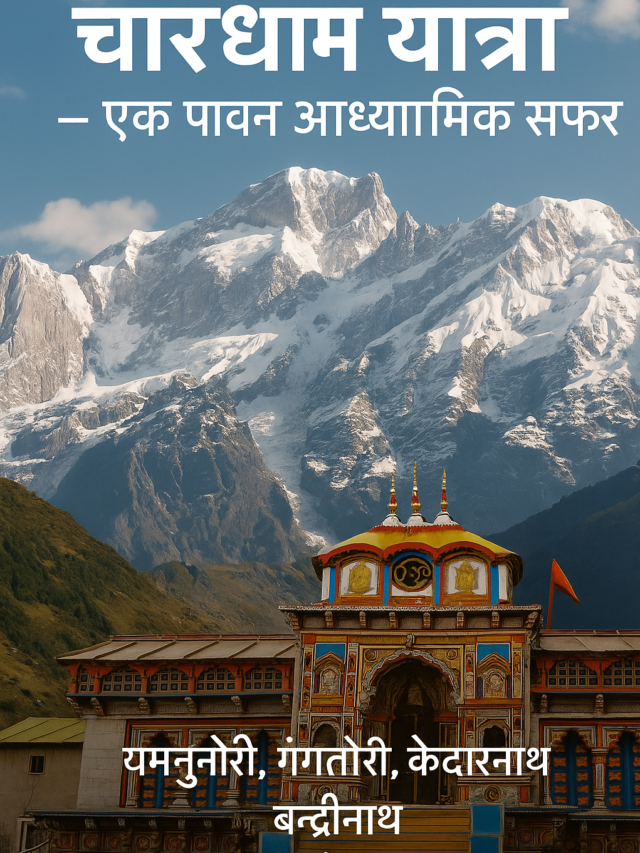
Badrinath is located nearly 25 kilometers away from Govindghat and is one of the four holy Char Dham pilgrimage sites of Lord Vishnu. The temple lies on the banks of the Alaknanda River and is considered a significant religious site for Hindus.
Joshimath
Joshimath serves as the gateway to several Himalayan adventures. It is home to the ancient Jyotir Math, established by Adi Shankaracharya, and offers panoramic views of the surrounding mountains.
Auli
Just a short drive from Joshimath, Auli is famous for its skiing slopes during winter and breathtaking Himalayan vistas throughout the year. Visitors can also enjoy one of India’s longest ropeway rides.
Govindghat
This peaceful mountain town marks the starting point for both the Valley of Flowers and Hemkund Sahib treks. Its riverside setting and surrounding forests make it an attractive stop for travelers.
Conservation and Environmental Importance
The Valley of Flowers is not only a popular tourist destination but also one of India’s most important protected ecosystems.
The park is home to many rare plants of alpine origin, several of which are endemic to the Himalayan region. The Himalayan park also shelters animals of endangered species such as snow leopards, Himalayan musk deer, and Himalayan black bears.
Due to its essential importance to the ecosystem, the Government of India subsequently designated it as a National Park in 1982, enabling UNESCO to later include it in the Nanda Devi and Valley of Flowers World Heritage Site.
To protect this fragile ecosystem, strict conservation measures are enforced:
- Overnight camping inside the park is prohibited.
- Picking flowers or collecting plants is strictly forbidden.
- Plastic waste should be avoided.
- Visitors must stay on designated trails.
- Wildlife should never be disturbed or fed.
Climate change presents new challenges for the region. Rising temperatures, changing rainfall patterns, and shifting flowering seasons may affect the valley’s delicate ecological balance. Scientists continue to monitor these changes to better understand their long-term impact.
Responsible tourism plays a vital role in preserving this Himalayan treasure for future generations.
Read More: Jagannath Puri , Rajgir Malmas Mela , Shilpa Shastra . . .e.t.c
Conclusion
The Valley of Flowers National Park is perhaps one of the most remarkable natural wonders found in India where beautiful landscapes, rich biodiversity, and Himalayan peace unite perfectly in symphony. During summer, its alpine pastures transform into an amazing colorful spectacle attracting travelers, botanists, photographers, and nature enthusiasts from all over the world.
But the valley has many more things to offer apart from being an aesthetic destination. What it represents is the tenacity of nature, the essence of conservation, and the wonderful variety of living beings found in the high Himalayas. Whether it is its mysterious past and mythological association or its specific flora and fauna and splendid trekking routes, every part of the valley has a story to tell.
If you are arranging your maiden trek to the Himalayas, looking for an escape to the lap of nature, or visiting India’s World Heritage Sites, the Valley of Flowers will give you an experience that is unmatched. While walking in this region filled with vivid colored valleys dotted with mountains with snow-covered peaks, you will realize how travelers through centuries have termed this place India’s Blooming Paradise.
In combination with the park administrators, we visitors must shoulder our proportionate share of responsibility for the preservation of such a delicate ecosystem. Through the means of responsible tourism and giving due respect to the park’s conservation rules and regulations, we can make sure that the flora of the park will continue to amaze people for years to come.
Susbcribe to Our Youtube Channnel: https://www.youtube.com/@BhartiSanskriti-BS