
Table of Content
Contents
Bihar has played an important role in different chapters of Indian history. Some of these important periods include Magadha, the Mauryan Empire, Buddhism and Jainism, and it also includes some notable ancient educational institutions. Bihar Museum in Patna depicts these stories through archaeological artifacts, sculptors, coins, paintings and other regional art pieces.
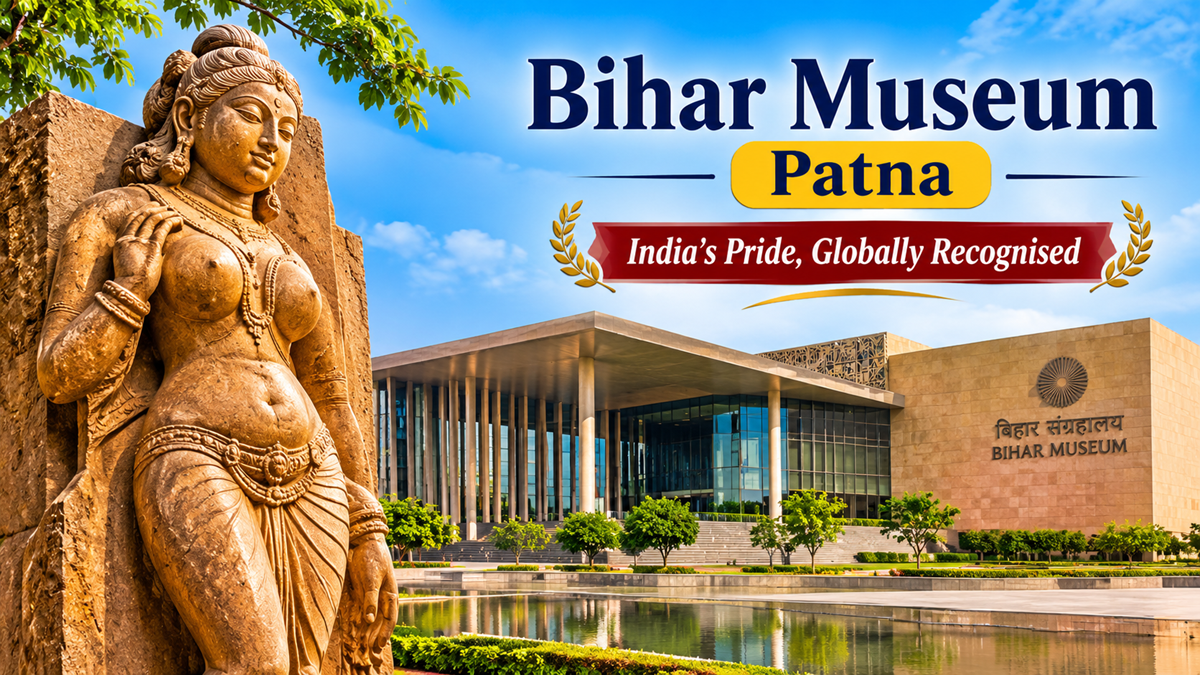
The World’s 100 Best Museums 2026 list released by German travel guide and digital magazine “Worth a Journey” has given the Bihar Museum the 9th rank in the world and first in Asia. The Metropolitan Museum of Art in New York is ranked tenth, and the Louvre Museum in Paris is 31st. This is an important accomplishment, but this Bihar Museum ranking by this publication cannot be considered an absolute measure of a museum’s quality.
What Is Bihar Museum? An Overview
Bihar Museum is a state-run museum located on Nehru Path in Patna, covering an area over 13 acres. Opened in 2015, it was established as a modern cultural institution where the history and artistic traditions of Bihar can be preserved and exhibited in adequately designed rooms. According to its official website, the museum has a collection that showcases the history of the Bihar region from ancient times to 1764 and traditional, folk, and contemporary art.
The Bihar Museum’s official website describes a collection of over 30,000 artifacts, such as archaeological discoveries, sculptures, terracottas, coins, and manuscripts, as well as art pieces. In between the chronological exhibitions, there will also be sections aimed at regional art, migration, transparency of storage, and teaching of kids. The variety is enough for research specialists, students, families, and tourists.
Bihar Museum Ranks 9th Among the top museums in the world
Achieving a position in the list published in 2026 is a significant step for the Bihar Museum. Worth a Journey announced that the Bihar Museum was placed ninth on its list of 100 museums from around the world. Bihar Museum was the highest-ranked museum in Asia and the only Indian museum on the list according to media reports published in October 2026.
The result has brought fresh visibility to an institution presenting Bihar’s history and living art traditions. Museums differ in size, collection and purpose, so no single ranking can serve as a universal standard.
For Patna, the recognition offers an opportunity to encourage cultural tourism and introduce more visitors to the city’s heritage.
History of Bihar Museum: Why Was It Established?
The Bihar Museum was created due to the requirement of an adequate space for the heritage collections of the state in a modern ambiance. Patna Museum, established in 1917, has preserved important historical and archaeological artifacts, but its growing collections created limits on what could be displayed. A new institution offered room for additional galleries and a broader approach to public interpretation.
Inaugurated in 2015, Bihar Museum opened its facilities and galleries in phases. It complements rather than replaces Patna Museum; the two are separate institutions with different histories, buildings and displays.
The aim of the museum is to provide a coherent account of the history of the region, ranging from the Stone Age and ancient civilizations to religious movements and artistic traditions and finally to social transformations. The various exhibitions of artworks make this heritage accessible to the general public.
Bihar Museum Architecture
The identity of Bihar Museum is associated with architecture. The project was designed by Maki & Associates with the collaboration of Indian architects. The complex is designed in the form of a linked campus instead of being an isolated block. Spaces with buildings, landscape and courtyards provide a different sense of experience of indoor and outdoor spaces.
The galleries are linked with the landscape via open courtyards and shaded paths. Important elements of the design include natural light and visitor traffic, not in imitation of a historic monument, but rather utilizing modern structures to showcase historical collections.
The contrast is fitting: the building belongs to the present, while its collections carry stories from many different periods.
Historical Collections and Important Galleries at Bihar Museum
The galleries are staged in such a way that the visitors can get a sense of various periods and themes in the history of Bihar. The official descriptions by the museum highlight ancient civilisations, dynasties, religious traditions, regional art, migration, and the modern creativity. The next brief will provide us with the most important spaces of the museum.
Orientation Gallery
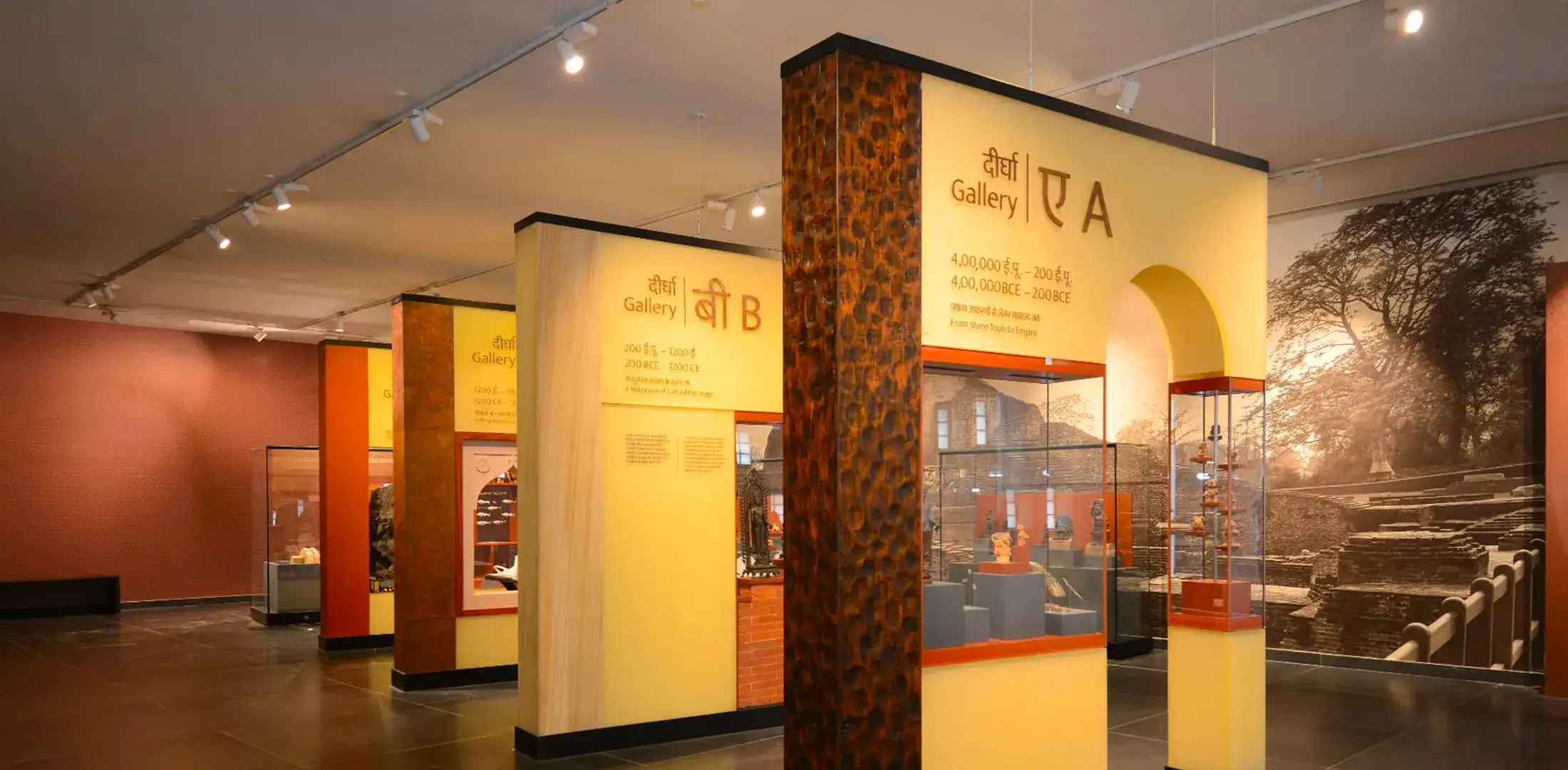
In the Orientation Gallery, visitors are presented with useful information about the whole experience ahead. A brief film and some interpretive displays demonstrate how historians and archaeologists investigate the past using objects, proofs, and techniques. It is a good starting point for guests who want to acquire the general background before proceeding to the collections.
Gallery A: Ancient Civilisations, Magadha and the Mauryan World
Gallery A covers the beginnings of early civilisations in the area and the evolution of its history; this includes the rise of Magadha as an important political centre. Gallery topics include the Indus Valley Civilisation and the emergence of the Mauryan dynasty and the rule of Ashoka. The gallery also covers Buddhism and Jainism, religions that are associated with Bihar and the surrounding east Gangetic region of India. All of these subjects explain to the visitors how Bihar became important in the historical and social histories of the subcontinent.
Gallery B: The Sunga, Kushana, Gupta and Pala Periods
Gallery B continues the narrative by covering the dynasties and artistic advancements that occurred after the Mauryan period. Among the items on display in the museum are those related to the Sunga and Kushana periods, as well as the Gupta and Palas periods. This wide historical spectrum makes it easier to understand the evolution of art styles, in particular sculpture as well as the spiritual and cultural exchanges of the time. The age of Pala is remarkable in the history of Buddhist arts and education because it was home to the renowned centers of learning such as Nalanda and Vikramashila.
Gallery C: Medieval Bihar and Cultural Connections
In Gallery C, you can learn the history of the later times in Bihar and the influence of different cultures on it through various themes, including the kingdoms of Delhi and Bengal, Nawabs of Bengal, Sufism and Sikhism. The Patna School of Painting, or Patna Kalam, has also been introduced since it is very unique in representing the culture through depictions of different activities of life as well as work, trade and local ways of life. The gallery helps show that Bihar’s history continued to evolve through political change, artistic exchange and interaction among communities.
History Art Gallery: Sculpture, Painting and the Didarganj Yakshi
The History Art Gallery is home to some important works of artistic creativity. The most famous work in this gallery is the Didarganj Yakshi, a polished Chunar sandstone sculpture that is connected with ancient traditions of art. Other items in the gallery include Patna School paintings (Patna Kalam), bronzes, artworks from Buddhism and Jainism, depictions of Hindu gods, and Daniell prints and paintings from the medieval times. These works reveal how religious ideas, visual styles, and technical skills developed across different periods.
Regional Art Gallery: The Folk and Artistic Traditions of Bihar
The Regional Art Gallery showcases art practices that have gained importance over the years. Bihar has many rich art traditions like Madhubani painting, Manjusha painting, Patna Qalam and Sikki grass art. Each is unique in its materials, modes of expression, stories and background. The Gallery aims to help its visitors interpret folk and regional art in light of cultural knowledge and identity.
Diaspora Gallery: Bihar Beyond Its Borders
The Diaspora Gallery examines the migration and impact of individuals from Bihar across India and the world. Emigration has played a huge role in the development of personal histories, ways of living and culture of many generations of people. Through the narration of this theme, the gallery aims to broaden the scope of the notion of heritage and reveal the way people take language, cuisine, traditions and memories with themselves.
Visible Storage: Coins, Terracotta and Archaeological Objects
Visible storage allows visitors to see objects more closely than conventional exhibition cases do. This area of the museum has been described as taking visitors from the age of archaic coins to the middle ages of currency, terracotta and sculptures. Coins can help provide information about rulers, trade, economy, imagery, and exchange. The terracotta objects, in their turn, can support information about craftsmanship, beliefs, and the everyday lives of people.
Children’s Gallery and Contemporary Art Gallery
The Children’s Gallery presents children’s interaction with animals, folk art, culture, and science through interactive exhibits. The Contemporary Art Gallery showcases works of contemporary Indian artists and painters. These two spaces combine preservation and education with modern creativity.
Famous artifacts and Must-See Attractions
There are a number of objects which are of historical significance in the museum, but only a few of them are known for their artistic excellence and association with the region’s past. Didarganj Yakshi is among the most popular artifacts. Among the Kurkihar bronze objects, archaeological coins and terracotta artifacts, one should pay special attention, as they cover some different sides of the lives of religious practices, craftsmanship and commerce.
Didarganj Yakshi

The Didarganj Yakshi is a renowned sculpture made of Chunar sandstone. The museum believes that the sculpture was created in the third century BCE, and its discovery was made in Didarganj nearby Patna. The sculpture holds a chauri, or fly-whisk. The sculpture is notably admired for its polished surface, jewellery, and well-done drapery. The sculpture measures about 153 cm in height, not including its base.
It is important as an artwork, evidence of stone-working skill and an expression of ideas about beauty and feminine power. It is a signature object in the History Art Gallery.
Kurkihar Bronze Sculptures
The discoveries at Kurkihar are a notable collection of bronze artifacts connected with the Buddhist art of the area. The museum has in its collection a Kurkihar bronze statue of Buddha with a door jamb and places the date of creation of this statue in the eighth-twelfth centuries CE. These artifacts/artifacts show the craftsmanship of the bronze workers and the significance of the Buddhist art traditions for eastern India in the Pala period.
Ancient Coins and Terracotta Objects
Though smaller than monumental sculptures, coins and terracotta items can provide rich insights into historical events. Coins, for instance, can be used by researchers to learn more about political authority, trade routes, and socio-economic changes. The same can be said about terracotta artifacts, which can be studied to gain more insights into various artistic tastes, household items, religion, and life in different communities long ago.
Why Is Bihar Museum Important for Bihar’s History and Culture?
The Bihar Museum houses artifacts belonging to a region responsible for key events in India’s history, to demonstrate the role Magadha played politically, to explore the Mauryan Age, Buddhism, and Jainism, and to present the cultural background of other peoples in the area. In addition, relics and artworks point out how heritage was established not only by rulers and constructions but also by artists and storytellers.
It provides students and scientists a chance to analyse and evaluate, locals as a way to connect to their regional history, and travellers as an additional knowledge source. Although the Museum’s 2026 ranking has made it more noticeable than before, its significance relies on items that it keeps and knowledge that it provides.
Visitor Information: How to Visit Bihar Museum
Location and Address
Bihar Museum
Nehru Path, Patna, Bihar 800001, India.
Opening Hours
| Facility | Hours listed by the museum |
| Main galleries | 10:00 AM–5:00 PM |
| Children’s Gallery, Children’s Café, Museum Shop and Library | 10:00 AM–7:00 PM |
| Restaurant | 10:00 AM–9:00 PM |
| Weekly closing | Monday |
The museum also lists selected religious and national holidays as closure days. Timings for individual facilities are not identical, so visitors should check the official visitor page before travelling.
Bihar Museum Ticket Prices
| Visitor category | Regular visit (10 AM–5 PM) | Evening ticket (5 PM–7 PM) |
| Indian adult | ₹100 | ₹50 |
| Indian child | ₹50 | ₹25 |
| International adult | ₹500 | ₹500 |
| International child | ₹250 | ₹250 |
| School group student | ₹25 per student | — |
These are the prices displayed on the museum’s official visitor page when this article was prepared. Confirm current rates and the facilities open under the evening ticket on the official visitor page before travelling.
How to Reach Bihar Museum
By air: Patna’s Jay Prakash Narayan International Airport is the nearest airport. Taxis and app-based cabs can take visitors to the museum on Nehru Path.
By train: Patna Junction is a major railway station serving the city. From the station, visitors can use taxis, auto-rickshaws or other local transport.
By road: Patna is connected to different parts of Bihar and neighbouring states by road. Local buses, taxis and auto-rickshaws can be used to reach the museum.
Facilities for Visitors
Facilities listed by the museum include a restaurant, children’s café, museum shop, library, drinking-water points, lifts and parking. Information about tours and group visits is also available. Visitors should confirm accessibility facilities and photography rules with the museum before arrival.
Best Time to Visit Bihar Museum
The museum is an indoor attraction where you can go throughout the year depending on its schedule and holidays. The period from October to March is perfect for visiting Patna and seeing the museum along with other attractions. Make sure that you check the visit hours before visiting it.
Frequently Asked Questions About Bihar Museum
Where is the Bihar Museum located?
Bihar Museum is located on Nehru Path in Patna, Bihar, India.
When was Bihar Museum established?
The museum was inaugurated in 2015. Its facilities and galleries were introduced in phases.
Why is Bihar Museum famous?
It is known for its archaeological collections, ancient sculptures, Didarganj Yakshi, historical coins, regional art and modern architecture. It also ranked 9th globally and 1st in Asia in the Worth a Journey’s 2026 museum list.
What is the ticket price of the Bihar Museum?
The official visitor page lists the regular admission Bihar museum ticket price as ₹100 for Indian adults and ₹50 for Indian children. Discounted evening tickets are also listed for Indian visitors. Check the museum’s website for the latest charges.
What are the opening hours of Bihar Museum?
The main galleries are listed as open from 10 AM to 5 PM, Tuesday to Sunday. The museum is closed on Mondays, with selected holiday closures.
Which famous sculpture can visitors see at Bihar Museum?
The Didarganj Yakshi is among the museum’s signature objects. It is a polished Chunar sandstone sculpture depicting a female figure holding a fly-whisk.
What is the difference between Bihar Museum and Patna Museum?
Patna Museum was established in 1917 and is one of the city’s older cultural institutions. Bihar Museum is a separate, modern state museum inaugurated in 2015. Both preserve important aspects of Bihar’s history and heritage.
How much time should visitors spend at Bihar Museum?
Allow several hours for a relaxed visit, especially if you plan to explore the historical and regional art galleries.
Read More Articles👉: Nalanda University, Bihari Cuisines, The Real Story Behind the Iron Pillar of Delhi . . . etc.
Experience the Glorious Heritage of Bihar
The Bihar Museum is not just another exhibit of antique artifacts, but it also gives a chance to the tourists to see the place that has had a huge influence on India in terms of politics, religion, art and learning. Starting from the period of Magadha and the Mauryan era, as well as the Didarganj Yakshi and Kurkihar bronze statues, the Bihar Museum is home to various ancient works of art and products of culture.
The Bihar museum architecture, classrooms, and art installations established in the region of the place draw in visitors of all ages. Being 9th in Worth a Journey’s 2026 list gives the place one of the top museums in the world and worldwide recognition, but the real reason to visit is to see and explore the vivid history and culture of Bihar in one location.


Subscribe to My Youtube Channel: https://www.youtube.com/@BhartiSanskriti-BS/