
Situated in the beautiful hills of Bihar, Rajgir is considered one of the oldest continuously inhabited towns of India and a holy site for devotees as well as history lovers. Once acting as the seat of the kingdom of Magadha, the town has been visited by numerous monarchs, philosophers, saints, and holy persons for centuries. Its heritage, hot springs, temples, and peaceful scenery make it a unique place where history and spirituality blend in perfect harmony.
One of the most special religious events celebrated in Rajgir is the Rajgir Malmas Mela. Unlike most fairs, which are celebrated yearly, this particular fair is unique in the sense that it is celebrated only during the duration of Adhik Maas (Malmas), which is an additional month usually added to the Hindu lunar calendar after a break of approximately three years. In line with the ancient customs and practices, it is believed that this holy period is very auspicious for worshipping the Almighty and performing various activities such as charity, meditation, and pilgrimage.
Each year, the Rajgir Malmas Mela draws pilgrims from all corners of India and overseas. At the event, they take a bath in the hot springs, pray in temples, listen to speeches on spirituality, participate in devotional singing, and experience the ambience of faith and spirituality. Besides the religious aspect, the fair also gives a glimpse of Bihar’s rich heritage through cultural programs, crafts, food, and festivities.
In this article, we’ll explore the fascinating history of Rajgir Malmas Mela, its mythological origins, religious significance, major rituals, and why this once-in-three-years festival remains one of India’s most extraordinary spiritual gatherings.
What Is Rajgir Malmas Mela?
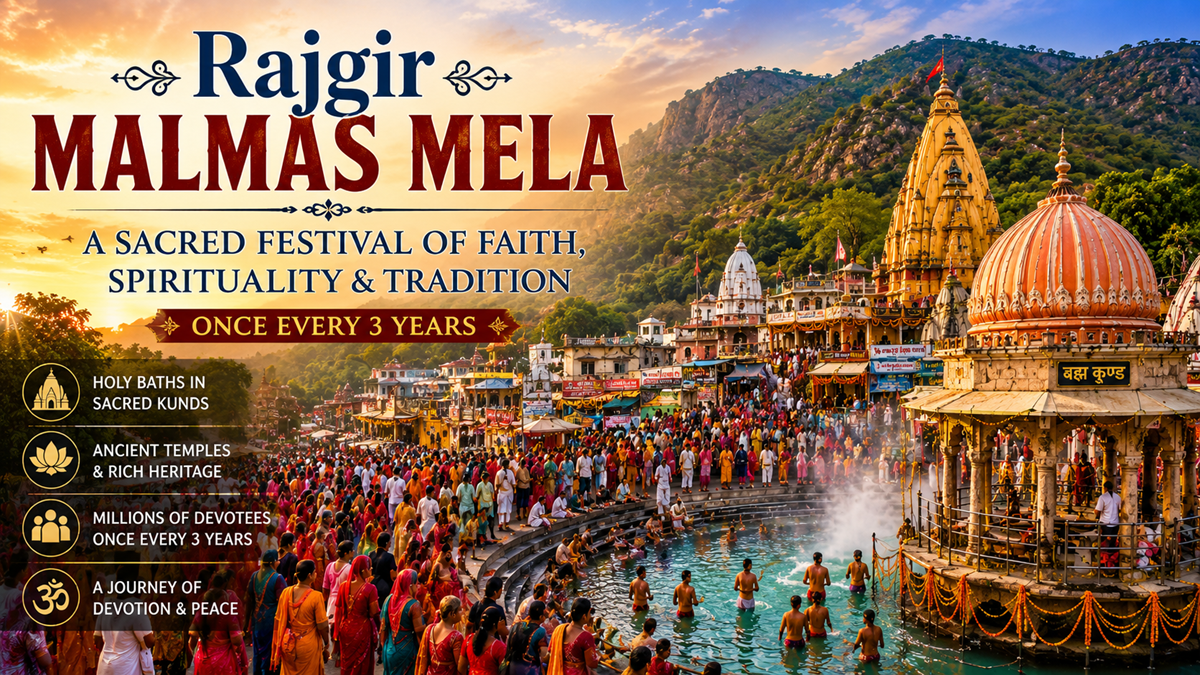
Rajgir Malmas Mela is the most renowned religious festival in Bihar, taking place during Adhik Maas, which is popularly known as Malmas or, in simple words, the “extra lunar month” of the Hindu calendar. As Adhik Maas occurs in a period of approximately three years, Rajgir Malmas Mela is also held during that time period.
In contrast to seasonal fairs based on trade or fun, Rajgir Malmas Mela is more like a spiritual pilgrimage. The people who visit Rajgir during the holy month for the sake of religious rituals, including a holy bath, religious practices, meditation, and contributions. Rajgir has become a unique place in spirituality with religious dignitaries, scholars, and pilgrims coming together for various spiritual activities.
Rajgir Malmas Mela’s uniqueness stems from the fact that it involves many religious traditions. Although it is mainly a Hindu pilgrimage, Rajgir also bears importance among Buddhists and Jains. The city contains ancient Buddhist relics associated with Lord Buddha, along with revered Jain temples associated with Mahavira, thus proving to be a great representation of India’s common spiritual legacy.
Over the course of the month-long fair, there are echoes of devotional songs, Vedic chants, and temple bells, as well as cultural performances in the city. Pilgrims are of the belief that the prayers made during Malmas hold specific spiritual rewards and contribute towards the purification of past karmas.
The Ancient History of Rajgir Malmas Mela
Rajgir: The Ancient Capital of Magadha
Rajgir, also known historically as Rajagriha or Girivraja, is one of the oldest cities in the history of India. With five beautiful hills around it, Rajgir was the first capital of the great Magadha Empire prior to the rise of Pataliputra.
The name of the city appears in many ancient texts, for example, the Mahabharata, Buddhist texts, Jain literature, and many Puranas. The city was governed by some historical figures such as Jarasandha, Bimbisara, and Ajatashatru who have played key roles in the history of India.
Its strategic location, natural fortifications, and spiritual environment made Rajgir an important center of religion, learning, and governance for centuries.
Mythological Origins of Malmas Mela
According to Hindu custom, Rajgir holds a significant place during Adhik Maas. It is believed that during this holy month, nearly 33 crore gods come to Rajgir and stay temporarily on its hills, temples, forests, and holy water bodies.
Due to this divine affiliation, the devotees believe that rituals done in Rajgir at this time are highly rewarding spiritually. The rituals include having holy baths in the sacred kunds in the area, praying in temples, donating, and performing other acts of devotion and charity.
Although these beliefs are rooted in religious tradition rather than historical documentation, they have been passed down through generations and continue to inspire millions of devotees to undertake the pilgrimage.
Evolution of the Mela
Over centuries, Rajgir gradually evolved into one of eastern India’s major pilgrimage destinations. Kings and local rulers supported temple construction, improved pilgrimage routes, and encouraged religious gatherings.
With the ease of traveling and the increasing popularity of religious tourism, the Malmas Mela developed into one of the major spiritual important mass gatherings. Presently, Bihar government and local authorities have made big arrangements for security, drinking water, travel, accommodation, and cultural activities during the excursion.
Despite modernization, the fair has retained its traditional spiritual essence, preserving rituals and customs that have been followed for generations.
Why Is Malmas (Adhik Maas) Considered Sacred?
One of the most fascinating aspects of Rajgir Malmas Mela is its connection with Adhik Maas, an extra month in the Hindu lunar calendar.
The Hindu calendar is fundamentally based on the moon cycle, but the solar year is about 11 days longer than 12 lunar months; thus, in order to synchronize the lunar months with the solar year, an extra month—known as Adhik Maas—is added about every 32-33 months or in other words; once in three years.
Historically, this additional month was deemed inappropriate for ceremonies like weddings, housewarming parties, and other big social gatherings. Therefore, this month was dubbed Malmas meaning “extra” or “intercalary” month literally.
However, Hindu scriptures emphasize that while worldly activities may be postponed, the month is highly favorable for spiritual pursuits. Devotees are encouraged to:
- Perform daily worship.
- Read sacred scriptures.
- Chant mantras.
- Observe fasting.
- Donate food, clothing, and essentials to the needy.
- Visit pilgrimage sites.
- Practice meditation and self-reflection.
Numerous followers recite texts such as the Bhagavad Gita, Vishnu Sahasranama, and other religious texts during this time. Rajgir, which has rich spiritual traditions, is one of the most popular destinations for pilgrims during Adhik Maas.
Religious Significance of Rajgir During Malmas
Sacred Hot Springs (Kunds)
Rajgir is famous for its hot water springs that have been drawing pilgrims for many centuries. The hot springs are geothermal formations that come from the nearby hills and are considered holy by the believers.
Among the most revered are:
- Brahma Kund
- Saptadhara
- Surya Kund
- Other sacred bathing tanks associated with ancient traditions
The day for the pilgrims starts with a holy dip in this warm, mineral-rich water. Believers feel that by bathing in these kunds during the Malmas, they are cleansing their bodies and minds and getting rid of any sins, and it prepares devotees for worship.
While these beliefs are matters of faith, the hot springs themselves are also valued for their naturally warm waters and unique geological characteristics.
Temple Worship
Once they have taken the holy dip, the devotees explore the various temples spread around the places in Rajgir. During Malmas, temples are thronged by pilgrims from dawn until dusk, praying and singing hymns in devotion.
Popular places of worship include:
- Lakshmi Narayan Temple
- Vishnu Temple
- Various Shiva temples
- Ancient shrines around the sacred hills
- Veerayatan and nearby Jain pilgrimage sites
Many devotees undertake temple circuits, offering flowers, lamps, fruits, and prayers at multiple shrines throughout the day.
Spiritual Practices
Rajgir Malmas Mela is much more than a religious gathering; it is a month dedicated to spiritual discipline.
Common religious activities include:
- Holy bathing (Snan)
- Puja and Archana
- Havan (fire rituals)
- Bhajan and Kirtan
- Meditation
- Religious discourses by saints and scholars
- Charity (Daan)
- Community feasts (Bhandara)
Many pilgrims spend several days or even the entire month in Rajgir, immersing themselves in prayer, self-reflection, and acts of service.
Legends Associated with Rajgir Malmas Mela
Like many ancient pilgrimage traditions, Rajgir Malmas Mela is enriched by stories that have been preserved through oral tradition and religious literature.
The Arrival of the Gods
One of the popular beliefs about the mela is the fact that during Adhik Maas, gods come down to Rajgir. According to this tradition, the town is seen as a temporary abode of divinity, which makes it a very holy place for worship.
Because of this belief, pilgrims consider a visit during Malmas to be spiritually rewarding and seek blessings for health, prosperity, and inner peace.
The Sacred Importance of Brahma Kund
The Brahma Kund holds a very significant position in the religious geography of Rajgir. Traditionally, it has been made sacred due to the presence of deities and continuous worship for many years.
The pilgrims consider this act of bathing as an essential part of the Malmas pilgrimage, usually followed by visiting temples and performing charitable deeds.
Land of Saints and Meditation
Rajgir has been connected with saints, monks, and seekers who established themselves in the peaceful hills of this region for meditation and spiritual development. Throughout time, the peaceful environment has given rise to an environment of education and faith, which is still alive.
Even today, tourists frequently refer to it as a religious site, but this helps them re-establish their connection with ancient Indian spirituality in a venue marked by a combination of history, beliefs, and spirituality altogether.
Major Attractions of Rajgir Malmas Mela
The Rajgir Malmas Mela is not just a religious event, but a colorful blend of faith, culture, and community. During the Adhik month, people come to this historic place to engage in religious, cultural, and spiritual activities that attract both worshipers and visitors from all over India.
Religious Processions
A delightful part of the mela is the spectacular religious procession. Many devotees, saints, and the local population processions through the streets chanting prayers and carrying idol images and symbols of worship. The atmosphere is filled with heavenly sounds of temple bells and conches, together with bhajans.
Spiritual Discourses
Famous saints, religious scholars, and community leaders made speeches clarifying the essence and significance of the Bhagavad Gita, Ramayana, Puranas, etc. This has encouraged people to live a life of love, justice, and service to God. There is a huge number of worshippers attending such sessions to understand their spirituality better.
Bhajan and Kirtan
Devotional songs form the core of the Rajgir Malmas Mela. Temples and other venues are filled with the sound of bhajans and kirtans from morning till late at night. Numerous devotees sing praises of Lord Vishnu, Lord Shiva, Goddess Lakshmi, and many other gods.
Cultural Programs
The fair is also a platform for showcasing the stunning art and culture of Bihar in the form of cultural shows. Traditional dances, music, plays based on spirituality, and storytelling are some of the activities enjoyed by visitors. These programs have created a chance for the youth to be connected with the culture of Bihar.
Handicrafts and Local Markets
Temporary markets are established throughout Rajgir during the mela. Visitors can purchase:
- Madhubani paintings
- Terracotta artifacts
- Handwoven textiles
- Brass and copper utensils
- Wooden handicrafts
- Religious idols
- Prayer beads
- Spiritual books
- Traditional souvenirs
These stalls not only attract pilgrims but also provide livelihood opportunities for local artisans and craftsmen.
Rajgir Beyond the Mela: Must-Visit Attractions
While the Malmas Mela is the highlight of the season, Rajgir itself is home to numerous historical, religious, and natural attractions. Visitors often extend their stay to explore these remarkable sites.
Vishwa Shanti Stupa
The Vishwa Shanti Stupa (World Peace Pagoda) is one of Rajgir’s most famous landmarks. Situated on top of Ratnagiri Hill, it was built by the Buddhists of Japan and stands for peace and harmony. The stupa can be accessed by the well-known ropeway, where you can have a beautiful view of the nearby hills.
Griddhakuta (Vulture Peak)
Griddhakuta Hill is counted among the holiest Buddhist pilgrimage destinations which is believed that Lord Buddha delivered many significant sermons at this place which are mentioned in Buddhist texts. The calm atmosphere of the place attracts meditators from various corners of the world.
Rajgir Ropeway
The ropeway offers an exciting journey over lush green hills and provides breathtaking aerial views of Rajgir. It is one of the oldest ropeway systems in India and remains a favorite attraction for tourists.
Cyclopean Wall
The ancient Cyclopean Wall surrounds parts of old Rajgir and is considered to be one of the oldest stone fortifications in India. This wall was constructed from huge blocks of stone without the use of any mortar and serves as an excellent example of ancient technology.
Son Bhandar Caves
These ancient rock-cut caves are associated with Jain traditions and local legends. According to folklore, they may conceal hidden treasures, adding an element of mystery to their historical significance.
Bimbisara Jail
Tradition holds that King Bimbisara was imprisoned here by his son Ajatashatru. Even from captivity, it is believed that the king could view Griddhakuta Hill, where Lord Buddha often meditated and preached.
Nalanda
Located about 15 kilometers from Rajgir, the ruins of the ancient Nalanda University are a must-visit destination. Once one of the world’s greatest centers of learning, Nalanda attracted scholars from across Asia and continues to inspire visitors with its architectural grandeur and intellectual legacy.
Rajgir Malmas Mela and Religious Harmony
Rajgir is a unique city where multiple faiths have flourished together for centuries.
Importance in Hinduism
Rajgir holds great significance for the Hindus as a pilgrimage site, famous for its sacred hot water springs, temples, and Malmas. According to pilgrims, performing puja here during the Adhik Maas leads to a lot of benefits.
Importance in Buddhism
Rajgir occupies a central place in Buddhist history. The Lord Buddha lived here for many years and shared some vital teachings at the Griddhakuta Hill. The city thus still remains an important pilgrimage site for Buddhists everywhere.
Importance in Jainism
Rajgir holds equal sanctity in the Jain religion as well. Lord Mahavira, who was the 24th Tirthankar, spent some time at Rajgir in his lifetime of spiritual pursuits. Some old Jain temples still draw pilgrims throughout the year.
This coexistence of Hindu, Buddhist, and Jain traditions makes Rajgir a powerful symbol of India’s pluralistic spiritual heritage and cultural harmony.
Best Time to Visit Rajgir During Malmas Mela
The ideal time to visit Rajgir is during the Malmas Mela, when the city is filled with spiritual energy and cultural activities.
For a comfortable experience:
- Visit the hot springs early in the morning.
- Attend evening bhajans and aarti ceremonies.
- Book accommodation several weeks in advance due to heavy pilgrim traffic.
- Wear light cotton clothing, especially during warm weather.
- Carry drinking water and sun protection while exploring the city.
Visitors seeking a quieter experience may plan their sightseeing on weekdays, while those wishing to witness the grandest celebrations often prefer weekends and special religious dates.
Economic and Cultural Importance of the Mela
The Rajgir Malmas Mela plays a vital role in promoting Bihar’s economy and cultural identity.
Each edition of the fair brings about substantial prospects of employment for hotels, transport services, shopkeepers, craftsmen, food supplies, etc. The presence of pilgrims stimulates tourism in the region and results in investments in public resources and infrastructure.
The festival is another way to protect and support traditional arts, crafts, folk music, and local culture. Local craftsmen can showcase their handmade products, and cultural performances play an essential role in preserving the rich heritage of Bihar.
Furthermore, the event strengthens social bonds by bringing together people from different regions, languages, and communities in a shared atmosphere of devotion and celebration.
Read Full Article: 10 Hidden Places in India , Shilpa Shastra , National Fruit of India: .. E.T.C
Conclusion
The Rajgir Malmas Mela is much more than just a religious fair; it embodies the unbroken Indian tradition of spirituality, richness of culture, and history. The fair is celebrated during the auspicious Adhik Maas only, which makes it such an exceptional event that converts Rajgir—the ancient city—into a bustling hub of worship, bringing in thousands of pilgrims seeking spirituality and peace.
In addition to its spiritual importance, the festival also gives guests an option to discover Rajgir’s outstanding heritage and ancient hot springs, temples, and Buddhist shrines. The religious melting pot and the traditional arts and food of Bihar contribute to the unforgettable experience.
Regardless of whether you are a believer, an aficionado of history, or a globetrotter searching for the cultural treasures of India, the Rajgir Malmas Mela presents a unique opportunity to take part in ancient traditions that have been alive for centuries. Going to Rajgir during this ritual ceremony not only means going on a pilgrimage but also having an educational experience connected with one of the most sacred places in India.


Subscribe to Our YouTube Channel: https://www.youtube.com/@BhartiSanskriti-BS