
Table of Content
Contents
India is sometimes recognized because of its lively culture, ancient civilization, and many different types of environments. The journey through India can be a pipeline between Mountain peaks, sandy oceanfronts, and scrubby deserts. However, hidden behind the big-name holiday venues are other destinations that are equally fascinating, as if they were located in another country.
Envision yourself wandering through a Himalayan settlement that has the appearance of Tibet, traversing a white expanse that resembles the salt flats of South America, or discovering a mountain community that resembles something you’d expect to see in Switzerland. All of these hidden secrets can allow visitors to have access to foreign-like sites and culture without leaving India.
If you’re looking for offbeat destinations that combine natural beauty, cultural richness, and a sense of adventure, here are ten hidden places in India that feel like foreign countries.
Why These 10 Hidden Places in India Feel So Different
Due to its unique geographical diversity and variety of landscapes, many Indian destinations are often confused for places in other countries. With deserts, mountains, islands, river basins, and tropical forests, the country boasts features resembling many different locations around the globe.
There are also historical influences at play. Multiple centuries of trade and migration have created various architectural styles, languages, and traditions in many places. Because of that diversity in culture, visitors may find parts of India to remind them of Europe (as in many European cities), Tibet (like Dharamsala), Central Asia (like the northwestern part), or the Arctic (for people who like polar bears) without ever stepping outside of India!
These destinations offer not just scenic beauty but also a sense of discovery, making them ideal for travelers who want something beyond the usual tourist circuit.
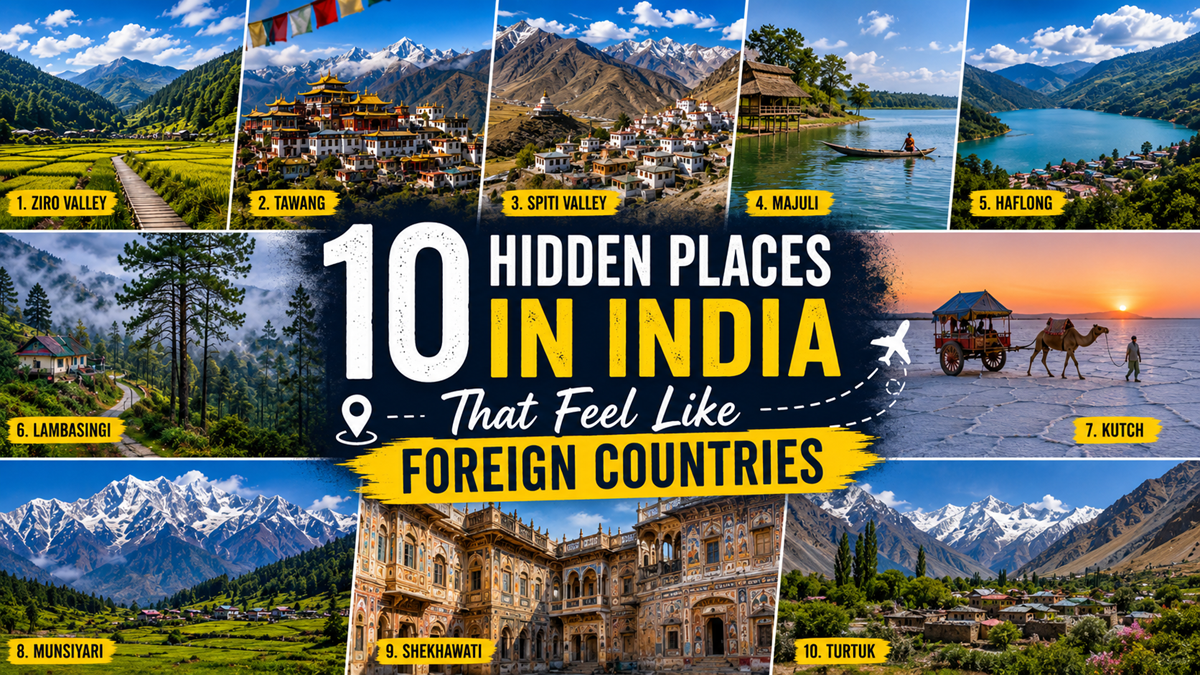
1. Ziro Valley, Arunachal Pradesh
Surrounded by undulating terrains along with verdant sceneries, Ziro Valley makes for one of North East India’s best-kept secrets, which has many beautiful places to visit. The area features large terraced rice fields, evergreen Pine forests, and small rural communities that combine to generate an ambience that closely mirrors what would be found in Europe.
The Apatani Tribe resided in a place called Ziro, where visitors get an insight into the culture of indigenous tribes that have preserved their customs for hundreds of years. The traditional houses built from bamboo, farming methods that do not harm the environment, and the relationship with nature make the valley feel to be worlds away from urban India.
This area’s beautiful scenery, along with its temperate climate, attracts nature lovers, photographers, and vacationers looking for peace and tranquillity. The area becomes a busy centre for musicians to perform and audience members to enjoy their culture during the well-known Ziro Music Festival, but it retains its tranquil beauty.
2. Tawang, Arunachal Pradesh
Tawang is known as the entry point for Tibet from India, bordering on China, and characterized by its Tibetan-style environment, including beautiful snow-capped mountains, colourful prayer flags, and even some old Buddhist Monasteries among its many attractions.
What stands out here in this area is Tawang Monastery, which is known to be among the largest Buddhist monasteries globally. When listening to the monks chant in peace and experiencing the spiritual energy of the monastery, visitors are left with an incredible experience.
Tawang is home to many untouched lakes, mountain passes, and incredible views of the Himalayas. For many visitors, they will feel like they are visiting a remote Tibetan town instead of somewhere in India, the place has many religious meanings in Tawang.
3. Spiti Valley, Himachal Pradesh
Spiti Valley is unlike any other place in India. Its rugged terrain, barren mountains, and dramatic landscapes resemble the remote regions of Tibet and Central Asia.
Spiti is often called the “Middle Land” between India and Tibet. Throughout Spiti are old monasteries positioned high on the mountainside and lonely little villages in valleys surrounded by huge mountains. The valley is so beautiful that at first glance it has an almost lunar look to it and seems somehow not of this world.
People who love adventure can go to Spiti and enjoy things like trekking, biking, and visiting small villages. For those looking for peace and relaxation, they can visit monasteries that have been there for hundreds of years like Key and Dhankar Monasteries.
The unique blend of adventure, spirituality, and stunning scenery makes Spiti one of India’s most unforgettable destinations.
4. Majuli, Assam
Situated on the mighty Brahmaputra River, Majuli is the world’s largest river island and one of India’s most culturally rich destinations.
The pace of life is much slower here on the island compared to living in a large city. There is a very traditional sense of community in traditional Assamese villages and the beautiful natural scenery (green fields, trees, etc.). The calmness of the rivers adds to this environment and makes it special.
The Satras (Vaishnavite Monasteries) are known throughout the world for being a center for art, culture, and spirituality. Visitors to Majuli can experience traditional dances, witness the process of making masks, and observe some of the oldest practices that have been treasured for generations.
The island’s peaceful surroundings and cultural authenticity make it feel like a hidden world of its own.
5. Haflong, Assam
Known as the “Switzerland of the East,” Haflong is a picturesque hill station surrounded by rolling hills, dense forests, and sparkling lakes.
Haflong is not a busy tourist place and therefore offers serene nature and peacefulness. The valleys often get covered in mist with fresh and friendly air coming down from the mountains, just like parts of Switzerland or the Scottish Highlands.
Indigenous peoples of this area provide an additional layer of cultural depth to the travel experience. Visitors can enjoy boating at Haflong Lake as well as hiking on scenic trails and discovering the region’s extraordinary diversity of plants and animals.
For travelers seeking a quiet mountain escape, Haflong remains one of India’s best-kept secrets.
6. Lambasingi, Andhra Pradesh
When people think of Andhra Pradesh, snow and cold weather rarely come to mind. Yet Lambasingi challenges those expectations.
This quaint hill town is referred to as “The Kashmir of Andhra Pradesh” because it has normally low temperature combined with a lot of winter fog. The esthetic of this place gives visitors a European mountain village feel because of the beauty of the pine trees, coffee becoming in an environment with fog covering the roads.
The surrounding forests and viewpoints offer spectacular sunrise and sunset views. During winter mornings, thick fog blankets the region, adding to its magical appeal.
Lambasingi is a perfect example of how India’s hidden destinations continue to surprise travelers.
7. Kutch, Gujarat
The Great Rann of Kutch is one of the most surreal regions in the world. The white salt desert stretches forever and can create many scenes that look like Bolivia’s well-known salt flats.
During the day, the bright white surface reflects sunlight in every direction. At night, moonlight transforms the desert into a glowing wonderland.
Every year, Rann Utsav is an exhibition of the local culture, including dancing, singing, and creating handicrafts, etc.. There is the option to camp in luxury tents while celebrating this wonderful festival in the desert!
The combination of natural beauty and cultural vibrancy makes Kutch unlike any other destination in India.
8. Munsiyari, Uttarakhand
Munsiyari, located in the Kumaon region of the Himalayas, is the ultimate dream for anyone who loves mountains. The snow-capped mountains on the horizon present an unbeatable view compared to that of the Swiss Alps.
As a starting point for numerous trekking paths, Munsyari features some of the most breathtaking glimpses of the Panchachuli mountain range. You can also find some of Munsyari’s stunning beauty in its lush green fields, pristine alpine forests, and cool mountain breeze.
Unlike more commercial hill stations, Munsiyari remains relatively untouched, allowing visitors to experience authentic Himalayan life.
Whether you’re a photographer, trekker, or nature enthusiast, Munsiyari offers a breathtaking escape into the mountains.
9. Shekhawati, Rajasthan
While Rajasthan is famous for its forts and palaces, the Shekhawati region remains one of its most overlooked treasures.
Many people know Shekhawati by its nickname – “the world’s largest open-air art gallery.” In addition to havelis, which are generally rich in history and decorated with elaborate frescoes that tell stories of trade, culture, and daily life in the region, there are many more impressive features found throughout this part of India.
Towns like Mandawa or Nawalgarh feel like walking through a preserved heritage town from a different time. The buildings and artistic heritage can be compared to many historic European towns.
For history enthusiasts and architecture lovers, Shekhawati offers a fascinating journey into India’s artistic past.
10. Turtuk, Ladakh
Turtuk, located in the north-most region of India, is the ‘Cultural Treasure’ of the territory, with very little access for tourists until recent decades. The village provides an insight into the traditional culture of the Balti, and is definitely a destination worth visiting.
Compared to other parts of Ladakh, Turtuk has lush green trees, stone houses, and fertile land with beautiful rock formations in the background. Turtuk’s unique houses, language, and customs have deep historical ties to both the culture and heritage of Baltistan.
Many visitors describe Turtuk as feeling quite different from other places in India. A distinct identity and remote location combine to create one of India’s most remarkable hidden treasures.
Why These Places Matter
India has many great destinations that highlight the vast range of diversity found throughout the entire country. They also show how international visitors can have access to very different types of landscapes and cultures right here in India without needing to travel abroad.
Visiting such countries provides opportunities for those looking to gain insight into different cultures, help local economies, and experience eco-friendly tourism; they can also serve as viable alternatives to congested areas; therefore providing the traveler with a more accurate source of experience.
Travel Tips for Visiting Hidden Places
Before visiting these offbeat destinations, keep a few important tips in mind:
- Research weather conditions and accessibility.
- Respect local customs and traditions.
- Carry essential medicines and supplies when traveling to remote areas.
- Support local businesses and artisans.
- Avoid littering and practice responsible tourism.
- Plan transportation carefully, as some destinations have limited connectivity.
Responsible travel helps preserve these unique places for future generations.
Read More Article👉: The Story Behind the Invention of Zero , National Fruit of India, How PM Modi’s 2026 Gift Diplomacy, GI Tagged Crafts of India
Conclusion
India’s undisclosed travel destinations show travelers a very different perspective on it than most would see. The Tibetan-style landscapes of Tawang and Spti, as well as the stunningly beautiful Munsiyari and Haflong in Switzerland, provide some real examples of the incredible diversity of India.
Each of these locations brings their unique mix of history, culture, and beauty to create an experience that will leave you feeling as if you’ve entered an entirely different country than where you began. Regardless of whether you like to travel for fun (adventure), because you love to experience new cultures (culture), because you’re a photographer (photography), or simply because you’re looking for something new (adventure), these hidden gems should definitely be on your travel bucket list.
Sometimes, the most extraordinary international-style travel experiences are not found abroad—they are waiting to be discovered right here in India.

Subscribe to Our Youtube Channel: https://www.youtube.com/@BhartiSanskriti-BS