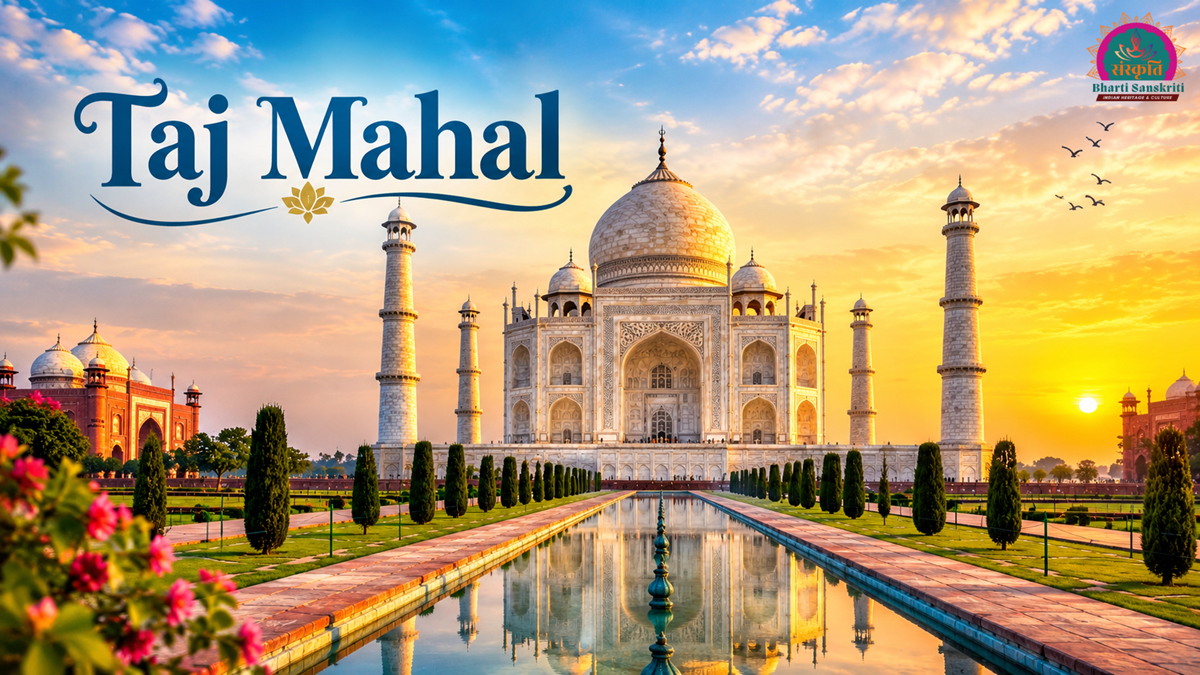

The Taj Mahal is among the most stunning historical sites around the world and is an important part of India’s culture. Located on the banks of the river Yamuna in Agra, in the state of Uttar Pradesh, this unique white marble tomb attracts millions of tourists thanks to its beautiful look, excellent engineering, and interesting story. The monument was constructed by the Mughal ruler Shah Jahan in remembrance of his wife Mumtaz Mahal in the seventeenth century and has gained world fame for being connected with such notions as love, memory, and supreme art.
Beyond its romantic image, the Taj Mahal plays a role in Indian history. The impressive dome, minarets, beautiful marble work, inscriptions from the Koran, and the well-maintained gardens illustrate the wonderful craftsmanship of those who created the Taj Mahal under the support of the Mughal emperors. The site earned UNESCO World Heritage Site status as early as 1983, and it continues to draw the attention of historians, architects, students, artists, and visitors. It is clear that the history of the Taj Mahal is much wider than just the history of a building, since this structure is a symbol of India’s remarkable achievements in architecture and culture.
Taj Mahal at a Glance: Essential Facts
Located in Agra, Uttar Pradesh, along the banks of the Yamuna River, the Taj Mahal is an elegant Mughal-era mausoleum built in the 1600s. Shah Jahan commissioned it after Mumtaz Mahal’s death in the year 1631. Construction began in 1632, and the mausoleum was completed in 1648. However, other structures surrounding the whole complex were built in stages until completion in 1653.
| Feature | Details |
| Monument | Taj Mahal |
| Location | Agra, Uttar Pradesh, India |
| Commissioned by | Mughal Emperor Shah Jahan |
| Built in memory of | Mumtaz Mahal |
| Construction began | 1632 |
| Main mausoleum completed | 1648 |
| Wider complex completed | 1653 |
| Principal material | White marble |
| Architectural style | Mughal architecture with Persian and Indo-Islamic influences |
| River | Yamuna |
| UNESCO recognition | 1983 |
The Taj Mahal is not just a freestanding building but instead is a unified architectural complex. The mausoleum, which is the main building of the complex, is bordered by an impressive entrance gate, formal gardens, mosque, a guesthouse, and numerous other buildings and structures. All these elements combined create a harmonious composition that combines the aspirations of the artists of the Mughal Empire as well as the architectonic traditions.
History of the Taj Mahal: The Story Behind Its Construction
Shah Jahan and Mumtaz Mahal
The fifth Mughal emperor, Shah Jahan, reigned between the years of 1628 and 1658 when he became famous for being an important patron of architecture as well as decorative art. Under the rule of Shah Jahan, Mughal architecture flourished and became famous for its distinctive features characterized by harmony of proportion, majestic domes, embellished decorative surfaces, and excellent quality of the materials used to build the structures. There are many famous monuments constructed or founded by him during his reign, but the Taj Mahal remains the most well-known architectural creation of Shah Jahan.
Mumtaz Mahal, originally known as Arjumand Banu Begum, wed Shah Jahan in 1612 and became his primary wife. She is said to have supported him during most of his personal and public life until her death which greatly affected the emperor. While it is known that she died after giving birth to their fourteenth child during a military expedition in Deccan in 1631, it is said that the emperor, who was deeply affected by her death, later ordered the construction of a magnificent mausoleum for her.
When and How Was the Taj Mahal Built?
Construction of the foundation began in 1632, and the main mausoleum was completed by 1648. Other related buildings and decorations to embellish the site continued to evolve until around 1653. The project required significant planning, financial resources, transportation of building materials, and coordination among skilled workers from several places.
White marble quarried from the Makrana area of today’s Rajasthan was used extensively for the central mausoleum, whereas red sandstone was used for other buildings in its vicinity. Carvers, calligraphers, inlayers, masons, and dome builders, each a specialist in his own field, worked on this project. Thus, the end product was a building where many crafts and architectures came together under one roof.
While the popular story may claim that the whole endeavor was the work of one architect or something extraordinary happened during its building process, this story should be regarded skeptically unless there is any reliable information. In fact, the Taj Mahal was the product of collaboration among many professionals, not the work of one person.
The Magnificent Architecture of the Taj Mahal
The Taj Mahal is regarded as one of the best examples of Mughal architecture due to its balanced proportions, beautiful designs, and ornate decorations. The architectural style of the Taj Mahal reflects a combination of Persian, Islamic, Central Asian, and Indian influences, indicating that it was possible for architectural styles to merge and evolve under imperial rule.
The Grand Dome and Four Minarets
Taj Mahal is considered as one of the greatest works of art from the Mughal period due to its harmonious proportions and aesthetic beauty. Its architectural style represents the manifestation of architectural skills that have integrated with certain architectural designs of other cultures, mainly from Persian, Islamic, Central Asian, and Indian architecture to create something unique. All its components, including its domes and nearby gardens, work together in a balanced way.
There are four minarets positioned on the four corners of the marble platform, thereby giving a beautiful coverage to the central building as well as establishing a lining pattern. The minarets being quite slender in their vertical designs, make a good contrast against the square base forming a combination of architecture and decorum. The placement of the elements shows the significance of Geometry in Mughal architecture.
Marble Inlay, Calligraphy and Decorative Art
One of the most outstanding aspects of the Taj Mahal is the intricate marble inlay it possesses, which is called “parchin kari” in the craft dictionary of Agra and connected to the more general method “pietra dura.” Craftsmen split small pieces of colored stones and insert them into the white marble to create floral patterns, vines, and geometrical designs. This challenging method requires great precision since it is necessary to ensure that the pieces fit exactly and that smooth and detailed surfaces are created.
Arabic calligraphy serves as one of the decoration forms of the monument. The Quranic inscriptions are seen on the different parts of the architecture, including the grand entrance of the building. The layout of the letters complements the proportions and shape of the building. In fact, marble inlay, carved details, and the calligraphy give the idea of the level of the craftsmanship that is present in the Taj Mahal.
Exploring the Taj Mahal Complex
The visit to the Taj Mahal starts with its grand entrance, which is a red sandstone gate that provides the first complete view of the pure white marble mausoleum. The artistic and inscriptive embellishments establish the architecture of the monument prior to gaining access to the garden area. The carefully devised approach prepares visitors for the main building and makes entry to it a unique experience.
The garden features the classical charbagh design, a concept that divides space into four main areas by the use of paths and water features. Being inspired by Islamic and Persian garden traditions, the garden creates the organized context for the mausoleum. The reflective pool built along the principal axis provides one of the most recognizable views of the structure, especially when the marble structure is reflected in the water.
The western part of the complex comprises a red sandstone mosque, whereas on the opposite side, stands a guest house, otherwise referred to as jawab. The two forms of architecture are so well matched in design that they help preserve visual balance at the site. The central chamber of the mausoleum contains the cenotaphs of Mumtaz Mahal and Shah Jahan. A cenotaph means a tomb that does not contain the remains of the buried person, and the real grave of the two is located below the mausoleum. The Taj Mahal includes architecture, landscape design, religious aspects, and its memorial function in its design.
Why Does the Taj Mahal Change Colour?
Tourists frequently notice that during the day, the Taj Mahal looks quite different. At sunrise, it may take on soft pink or warm tones, while during the day it appears white. During the evenings as yellow sunlight impacted the building, a beautiful golden color appeared. The changing color of the monument provides beautiful vistas for photographers.
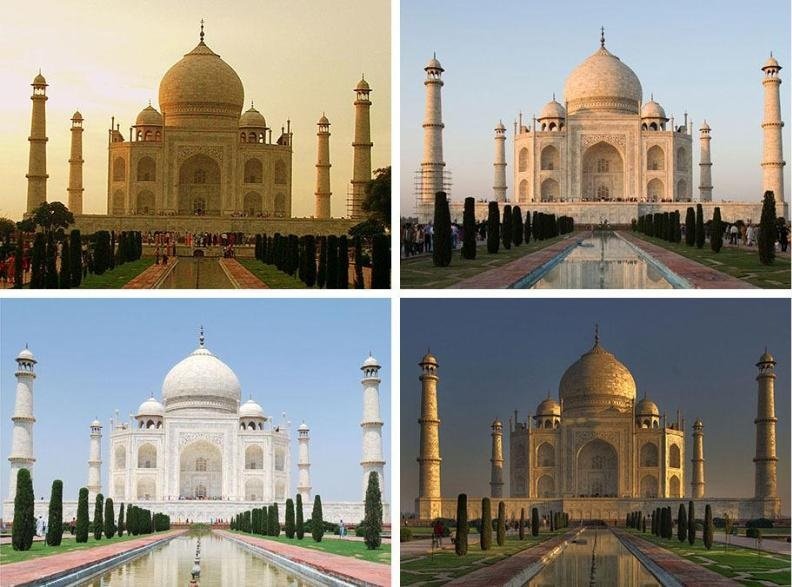
This difference in the structure’s appearance is mainly due to the variations in the quality of sunlight, atmosphere, and reflection of the light on the marble. Different types of clouds, haze, and the environment may affect the color of the building that people see. The Taj Mahal does not have any method by which it changes its color. This relation between the environment and the architecture is a reason why the Taj Mahal looks very different in each visit.
Interesting Facts About the Taj Mahal
There are several aspects of the Taj Mahal that give it its historical and architectural significance. The construction of the Taj Mahal started in 1632. However, the mausoleum was constructed by 1648 and the entire complex by 1653. The site was listed as a UNESCO World Heritage Site in 1983, recognizing its importance to the cultural heritage of humanity.
The monument consists primarily of white marble framed by elaborate floral patterns and designs made of multicolour stones. The seamless integration of all the architectural elements such as four minarets, a dome, a formal garden, a masjid, and a guesthouse makes it a masterpiece of architecture. The handicraft of marble inlay associated with the Taj Mahal is still being practiced by artisans in Agra, linking history to living traditions.
It is also important to note that the Taj Mahal is not only a memorial but also an example of the Mughal imperial culture as well. Even though the Taj Mahal is referred to as the monument of love, it still exemplifies the richness, political power, and technological know-how of the empire which ordered its construction.
Myths and Misconceptions About the Taj Mahal
Over the years, various tales have been told regarding the Taj Mahal. However, some of these tales do not always have solid historical foundations. One such tale is the claim that Shah Jahan had the hands of his builders cut off so that they were unable to build a second Taj Mahal. This tale is often told, but it should not be taken as a historical fact because there is no evidence for it.
Another issue that needs to be expounded on is the identity of the chief architect. Ustad Ahmad Lahori is often referred to as the chief architect of the Taj Mahal in history and heritage literature, but the monument was actually built with the inputs from several experts. It is, therefore, correct to phrase it in the way that it was not one person who conceived and executed the whole project.
The tale of the supposed Black Taj across the Yamuna River is another well-known legend. While the concept has been discussed in historical context, the fact of the existence of an already constructed black marble equivalent has yet to be proven. In addition, varying construction dates usually mean different periods in the progress of the building: 1648 is the year of completion of the primary mausoleum, while 1653 marks that of the entire complex.
UNESCO World Heritage Status and Cultural Importance
The UNESCO World Heritage List included the Taj Mahal in 1983 due to its great value in terms of architecture and art. UNESCO’s World Heritage status is granted to the places regarded as ones with its international significance which should be preserved for future generations. The Taj Mahal is a great illustration of the Mughal architecture due to its architectural harmony, decorative craftsmanship, and historical importance.
The monument carries a unique role in the cultural identity of India. It is represented in various forms of art irrespective of whether it is literature, art, photography, film, or any travel book. Since it is recognised all around the world, students can use it to learn about Mughal history, cultural exchanges, architecture, and craft traditions. History lovers can learn about imperial patronage and organisation of large-scale projects too.
The Taj Mahal is also a representation of the special link between traditional craftsmanship and live traditions. Marble inlay and decorative stone decoration techniques still influence craftsmen in Agra. Thus, safeguarding the monument means taking care of its physical structure as well as its historical experience and artistic traditions associated with it.
Conservation Challenges Facing the Taj Mahal
Even though the Taj Mahal’s beauty is everlasting, it still needs to be cared for and looked after constantly. Air pollution, airborne debris, and other environmental factors may have a negative impact on the marble’s condition and appearance. Thus, pollution control and scientific research form an important layer of conservation work. The river Yamuna as well as the surrounding landscape make part of the monument’s historical context, and it is thus important to look at the area in question.
Heavy tourist traffic creates additional challenges, including crowd management, maintenance, and the protection of delicate architectural surfaces. Conservation authorities must balance public access with the need to safeguard the monument. Visitors can contribute by following site rules, avoiding littering, respecting restricted areas, and treating the complex as a protected heritage site.
Long-term preservation depends on cooperation among conservation professionals, government authorities, researchers, local communities, and tourists. Responsible tourism helps ensure that future generations can continue to experience and learn from this extraordinary monument.
Taj Mahal Travel Guide: Essential Information for Visitors
The optimal time to visit Taj Mahal is dependent on the weather conditions, personal tastes, and experience that one wishes to have. The early morning time is considered to be favorable due to the fact that light is less harsh and temperature is comparatively cool, especially during hot weather. However, winters may see fog in the morning which would make the visibility poor. Visitors travelling during summer should prepare for high temperatures and consider an early visit.
As per the official Taj Mahal website, ordinary visiting hours of the general public generally last around 30 minutes before sunrise until 30 minutes before sunset. The tomb does not allow entry to common people on Fridays. Depending on the visitor category, ticket charges are different and entry to the main mausoleum could require the purchasing of separate tickets for entry. As schedules, prices, and admission regulations may change from time to time, visitors should check visiting-hours information on the official Taj Mahal website.
The transport links to Agra are comprised of land routes, railroads and air connections. Local taxi services and other transportation options are available to travel to the monument from railway or bus stations. Tourists should make sure to account for possible security protocols that need to be followed, check the list of what it is allowed to bring into the site, and pay attention to photography rules as well as wear comfortable shoes for walking through the place.
Other Historical Places to Visit Near the Taj Mahal
There are many interesting sites in Agra that demonstrate its significance through the Mughal period. One such site is Agra Fort, a historical complex of red sandstone, including several walls, courtyards, palaces, and other buildings related to Mughal emperors, Shah Jahan being one of them. Combining the visit to this site with the Taj Mahal allows the visitor to obtain a fuller picture of the architecture of the dynasty as well as the history of the empire.
Mehtab Bagh, located on the opposite bank of the Yamuna River from the Taj Mahal, provides a unique view of the Taj Mahal and the landscape in which it is set. The garden offers many opportunities for photographers and historians of garden design. Fatehpur Sikri, another destination associated with the Mughal period near Agra, is known for its grand doors, palaces, courtyards, and other staircase buildings linked to Emperor Akbar. This requires a different trip and needs more time to get there.
Explore More Articles👉: Red Fort (Lal Qila), Valley of Flowers National Park, Shilpa Shastra . . . etc.
Frequently Asked Questions About the Taj Mahal
Who built the Taj Mahal?
Mughal Emperor Shah Jahan commissioned the monument in memory of his wife, Mumtaz Mahal, and a large team of architects and artisans contributed to its construction.
When was the Taj Mahal built?
Construction began in 1632. The main mausoleum was completed in 1648, while the wider complex was completed in stages until 1653.
Where is the Taj Mahal located?
It stands in Agra, Uttar Pradesh, India, on the right bank of the Yamuna River.
Why is the Taj Mahal famous?
It is renowned for its architectural harmony, white marble construction, decorative inlay, calligraphy, gardens, and historical association with Shah Jahan and Mumtaz Mahal.
When did the Taj Mahal become a UNESCO World Heritage Site?
It received this recognition in 1983.
What is the best time to visit the Taj Mahal?
Early morning is a popular choice because of the softer light and potentially more comfortable temperatures. Visitors should consider seasonal weather and visibility.
Is the Taj Mahal open every day?
No. It is closed to general visitors on Fridays. Visitors should verify current opening hours and entry rules through the official website.
A Timeless Treasure of Indian Heritage
The Taj Mahal is a lot more than an amazing piece of white marble structure. It also records the events in Mughal history, marvels in the area of architectural planning, and shows the skills of generations of artisans. The mausoleum is a monument to the memory of Mumtaz Mahal, who died during the birth of the king’s child. Besides being a commemorative object, it is an example of artistic ambition at its highest level. The structure has a central dome, minarets, gardens, and marble inlay, demonstrating how architecture and craftsmanship can come together to create something enduring.
For students, the Taj Mahal provides valuable lessons about India’s past, cultural exchange, and the development of Mughal architecture. For tourists, it offers an opportunity to experience one of the world’s most celebrated heritage sites. For future generations, it represents a responsibility to protect historical treasures from environmental pressures and the effects of time. Its importance lies not only in its beauty but also in the history, skills, and cultural traditions it preserves. By understanding its past and supporting its conservation, we can help ensure that the Taj Mahal continues to inspire people in India and around the world.
The Taj Mahal remains a powerful reminder that architecture can preserve memory, express artistic achievement, and connect generations across centuries.




Subscribe to Our YouTube Channel: https://www.youtube.com/@BhartiSanskriti-BS