
Table of Contents
Contents
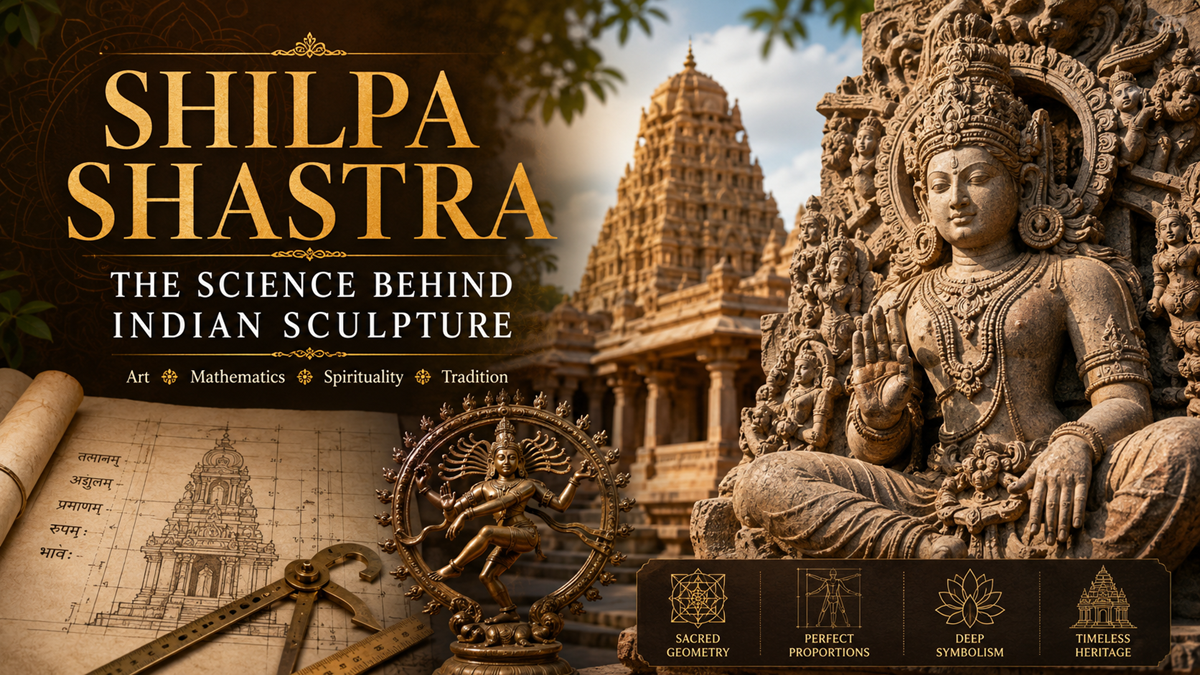
For hundreds of years, India’s temples and sculptures have attracted the attention of historians, architects, artists, and travelers alike; the Khajuraho Temple’s intricate carvings, the Chola Dynasty’s stunning bronze statues, and the monolithic marvel at Ellora’s Kailasa Temple are a few examples of the artistic genius, mechanical skill, and religious significance found in India. Although the sculptures are recognized for their aesthetic appeal, there is little knowledge of the fact that these sculptures were produced according to a very advanced system of regulations (Shilpa Shastra).
The term Shilpa denotes “the quality or style of being an artist” and “the way in which objects are made,” while Shastra denotes “a body of knowledge that is structured and systematized”; thus, in combination, the words Shilpa Shastra refer to ancient Indian texts that express the principles of creating sculptures, icons, architecture, paintings, and temples. These texts did not rely solely on the artist’s imagination; they also articulated mathematically proportioned, geometric-oriented, symbolic representations and construction methodologies that assured the sculptor created a physically perfect object that had an equivalent spiritual significance.
The creation of sculpture was more than just creating an image with either stone or metal for sculptors in ancient India; it was creating a sacred object with every measure, every gesture, every adornment, and every facial expression being done according to strict guidelines to produce an image that could be worshipped as representing divinity. The combination of science, spirituality, and aesthetic values that went into making the sculptures inspires architects, artists, and scholars throughout the world today.
In this article, we explore the fascinating science behind Shilpa Shastra, its origins, principles, symbolism, and lasting influence on India’s artistic and architectural heritage.
What Is Shilpa Shastra?
The word Shilpa Shastra has two separate meanings to define the collection of ancient Indian texts called Shilpa and what they are about. In this case, the first part is Shilpa, which is a Sanskrit word that means any type of art, craft, or skilled work. Therefore, both words have similar definitions; therefore, they will form one large body of written work that will define the craft of sculpture, constructing temples, metalworking, painting and icons, building furniture out of wood, and other types of traditional arts.
The collection we refer to as ‘Shilpa Shastra’ is, in fact, a collection of treatises/sutras written over a long period of time regarding design standards for both the design of sacred spaces and the elements (figurative carvings) used to create images of deities, and the means of constructing the images with a high level of accuracy. The treatise outlines not only how to carve an image (i.e., a statue) but also why each element, including the position of the hand, the expression of the face, the jewelry worn, and the posture of the sculpture, is important from both the symbolizing and the spiritual points of view.
The Shilpa Shastra is a guide for creating harmony with the deity’s form and its divine representation. Indian philosophers believed that an image of a deity would contain all of the cosmos if that image had perfect proportions, so sculptors adhered to strict requirements for proportion, length, material, and ritual.
Shilpa Shastra is related to Vastu Shastra, the building code in the original way that it would relate to the design, orientation, and spatial arrangement of buildings, while Shilpa Shastra is about how to decorate them with the intention of creating a temple as a whole expression of sacred art.
Origins and Evolution of Shilpa Shastra
Shilpa shastra is an ancient Indian tradition that views craftsman as ‘divine’ occupations as mentioned in Vedic literature; therefore, artisans had organizational artistic practices at least thousands of years ago. This ancient craftsmanship developed into a systematic book of manual guidelines for architects, sculptors, painters, and metallurgists to work.
The Principal Treatises that Have Helped to Develop Shilpa Shastra were: Manasara, Mayamata, Samarangana Sutradhara, Shilparatna, Aparajitapriccha, and Sections of the Vishnudharmottara Puranas; they discuss everything from Temple layouts and Iconography to Sculpture, Metalworking, City Planning, and Decorative Arts.
Different dynasties contributed to the refinement of these traditions:
- Maurya Empire (4th–2nd century BCE): Renowned for polished stone pillars and monumental sculptures.
- Gupta Empire (4th–6th century CE): Referred to as the golden period of Indian art, as it introduced delicate human figures and proportional figures.
- Pallava and Chalukya Dynasties: Advanced the development of rock-cut caves and structural temples with increasingly sophisticated carvings.
- Chola Dynasty: Perfected bronze casting, producing some of India’s finest metal sculptures, including the iconic image of Shiva as Nataraja.
- Hoysala Dynasty: Built extremely elaborate soapstone temples decorated with floral designs and mythical themes.
Although artistic styles varied from region to region, the scientific principles of proportion, geometry, and symbolism remained remarkably consistent throughout the Indian subcontinent.
The Scientific Principles Behind Indian Sculpture
Shilpa Shastra places an emphasis on using scientific principles to create the figures that are being carved and sculpted by the artisans. The sculptors of ancient India did not rely solely on their skills of observation, nor was creativity the basis for the pieces being produced. They utilized a combination of actually measured proportions with predetermined figures of measurement in order to arrive at the final product. These “ideal” figures would then signify the existence of the “divine” or “spiritual”.
Sacred Geometry
The geometrics of Indian temple design and sculpture were the basis of all these arts. The geometric shapes (Squares, circles, triangles, and mandalas) created a layout that was meant to be harmonious, creating a visual representation of the cosmic order. The geometric patterns created a balance of beauty and strength, so a temple or sculpture can achieve visual symmetry while also communicating a deep philosophical meaning.
Mathematical Proportions
All the gods and goddesses had set specific proportions for their bodies. The ratios for head/torso/arms/legs and face were predetermined rather than left to individual choice. The proportioning system used established measurements, which resulted in a balanced and harmonious effect that is typical of Indian classical sculpture.
For example, Vishnu is usually depicted balancing calm, symmetrical proportions depicting stability and preservation; however, Shiva’s forms usually depict both elegance and active energy. Goddess sculptures are made up of anatomically precise features that balance strength and compassion.
Traditional Measurement Systems
Shilpa Shastra used standardized measurements including Angula (the width of a finger), Tala (a proportionate measurement depending on how tall one is), Hasta (the distance from an elbow to a fingertip) and Yava (based on the size of a barley grain). These measurements didn’t have a true size; instead, they provided a proportional relationship to use in constructing sculptures of various sizes while maintaining a balance with the desired ideal form.
Precision Without Modern Technology
One of the great accomplishments achieved by sculptors working in antiquity has been their capacity to create sculptures with an extremely accurate level of mathematical precision long before the advent of modern measuring devices used by many artists today. They used measuring cords, wooden rule sticks, plumb lines, compasses, and other simple measuring tools to produce sculpture works that continue to amaze engineers and art historians alike. The quality of the sculptural works produced by these artists represents years of diligent instruction, meticulous craftsmanship, and an extensive knowledge of geometrical principles.
Symbolism and Iconography in Shilpa Shastra
Symbolism is attached to each aspect of traditional Indian sculpture. Everything is done intentionally-i.e., the placement of hands, eyes, number of arms, even the various ornaments worn by an individual god. All these aspects are specifically outlined in the Shilpa Shastra, making sure that each sculpture gives a message about philosophical or spiritual beliefs.
Mudras, or symbolic hand gestures, convey specific messages. For instance, the Abhaya Mudra stands for protection and fearlessness, and the Varada Mudra represents compassion and the bestowing of blessings. There are many other Mudras that symbolize different things, such as meditation, wisdom, teaching, and/ or a spiritual awakening.
Asana, or Posture, has a meaning as well. A standing figure can indicate your willingness to protect your devotees. A seated posture symbolizes meditation, physical stability, and supreme knowledge. Dancing forms, such as Shiva as Nataraja, illustrate the eternal cycle of creation (srishti), preservation (sthiti), and destruction (samsara).
Facial expressions are designed to evoke inner peace rather than intense emotion. Gentle smiles, half-closed eyes, and calm features encourage contemplation and reflect the spiritual ideal of equanimity.
The Vahanas (Vehicles), Weapons, Ornaments, and Crowns are also Symbolic. For example, the Chakra of Vishnu represents the Eternal Cycle of Time; the Trident of Shiva represents Creation, Preservation, and Destruction; and the Lion of Durga represents Courage and Power. These symbols are all part of the larger Triad of Symbols that make up the visual representation of Philosophical Ideas through Sculpture.
Materials Used in Shilpa Shastra
The choice of material was never arbitrary in Shilpa Shastra. Ancient sculptors believed that the physical medium influenced both the durability and the spiritual significance of a sculpture. Before beginning their work, artisans carefully examined the quality, texture, strength, and symbolic suitability of the material. A flawless stone or well-prepared metal was considered essential for creating a sacred image.
Granite has been one of the most important building materials for centuries, especially in southern India, due to its unique strength and resistance to weather damage. Although granite is difficult to carve, the result is a temple that has weathered nearly two thousand years with little sign of decay or deterioration. The durability of many of the large, beautiful temples of Tamil Nadu can be directly attributed to the use of granite in their construction.
Sandstone was preferred in several parts of North and Central India due to its softer texture and ease of carving. The fine-grained sandstone allowed sculptors to produce detailed work and made it the primary material used for many temples that are intricately decorated.
Marble became particularly popular in western India, especially in Jain temple architecture. Its smooth surface and luminous appearance added elegance and serenity to sacred spaces.
Metal has been an important part of Indian sculpture throughout history and continues to be today. Bronze has been the most common metal for use as temple idols and in festivals because it is strong, can be made into detailed figures, and is generally more resilient than any other metal; therefore, bronze was used extensively in temples throughout southern India. Chola bronzes represent some of the most famous examples of bronze casting in all of world art.
In traditional documents, one other holy metal alloy called Panchaloha or Panchdhatu is composed of five elements of the universe and is usually made from gold, silver, copper, zinc, and iron; it is believed to represent the five elements and to be used for creating worshipped idolatry in many temples.
Depending on local customs, belief systems, or visual standards, sculptors would have worked in materials such as wood, clay, or ivory. Regardless of the choice of material, the principles of Shilpa Shastra required all sculptures to be pure and crafted according to correct procedures to ensure that they exhibited both the skill of construction and heavenly purity.
Regional Styles of Indian Sculpture
Although Shilpa Shastra established universal principles, India’s diverse geography and cultural traditions gave rise to distinctive regional styles of sculpture. Each region interpreted the classical guidelines in unique ways while preserving the underlying ideals of proportion and symbolism.
The Nagara style, dominant in North India, the Nagara group of temples, which has a style that features curvilinear-shaped towers and sandstone images carved in high relief. The temples of Madhya Pradesh, Rajasthan, and Odisha exhibit very unique forms of sculptural detail and narrative depictions.
The Dravidian style of architecture, typically found in southern India, can be defined by the many gopurams and large granite temples that are prominent throughout South Indian culture. The sculptures created in this style usually emphasize dramatic sculptures, precise detailing, and cohesive architectural integration. Examples of temples that display this form of architecture can be found all over Tamil Nadu.
The Vesara building style originated in the Deccan region, possessing characteristics of both Nagara architecture (Northern India) and Dravidian Architecture (Southern India). It combines the tower forms found in Northern India with the spatial organization found in Southern India, thus creating novel types of temples.
The Chola bronzes, one of India’s greatest sculptural works, are known for their dynamic movement, elegant proportions and exceptional craftsmanship. The well-known image of Shiva as Nataraja shows off the technical excellence and spiritual symbolism of the Chola style.
Another exceptional regional tradition can be found within the Hoysala temples of Karnataka. The majority of very ornate stone sculptures are made of soapstone and include intricate carvings of gods/goddesses, dancers, and floral patterns along with scenes from Hindu epics, all of which demonstrate great attention to detail.
Together, these regional schools demonstrate the adaptability of Shilpa Shastra. While local aesthetics varied, the commitment to sacred geometry, symbolism, and artistic discipline remained constant across the Indian subcontinent.
Famous Temples That Showcase Shilpa Shastra
India’s architectural heritage provides countless examples of Shilpa Shastra in practice. Some temples stand out as extraordinary demonstrations of its scientific precision and artistic brilliance.
Madhya Pradesh’s Khajuraho Group of Monuments is famously known worldwide for its elaborately carved eternal sandstone sculptures representing all aspects of divinity (idols and divine beings), music, dance (as well as performing arts), and daily life. Each sculpture was created using strict adherence to established proportional guidelines, but was created to achieve realism and elegance.
The Konark Sun Temple in Odisha is built as a large stone cart, dedicated to the Sun God, representational in nature are the decorated wheels and horses, and nature’s ornamentation. These carvings demonstrate the incredible artistry of geometrical and engineering design as described in the Shilpa Shastra.
The Brihadeeswarar Temple in Tamil Nadu is an excellent example of the architecture of the Chola dynasty. Made mainly of granite, this temple is one of the most impressive pieces of architectural and sculptural engineering ever conceived. The towering vimana and intricately carved deities have inspired countless architects and historians throughout history.
The Kailasa Temple at Ellora is perhaps one of the most incredible monolithic structures in the world. It has been carved from one piece of stone and reflects remarkable planning, accuracy in mathematics, and skillful craftsmanship in its construction. All sculptures have been incorporated into the architectural design of the building.
The twin temples at Belur and Halebidu are the finest examples of Hoysala workmanship found in Karnataka. The walls have thousands of beautifully carved figurines, and each person has a high level of detail specific to its construction with accurate anatomy.
These monuments collectively demonstrate that Shilpa Shastra was not merely a theoretical tradition but a practical system capable of producing some of humanity’s greatest artistic and architectural achievements.
Relevance of Shilpa Shastra in the Modern World
Although centuries have passed since many of India’s great temples were built, the principles of Shilpa Shastra continue to influence contemporary architecture, sculpture, and heritage conservation.
Sthapatis (traditional temple architects) continue to refer to ancient texts in order to build new temples or restore old temples. They are also the keepers of the techniques used by past generations of craftspeople to make buildings.
Shilpa Shastra is becoming ever more popular with contemporary architects and designers. Its fundamental focus on proportionality, symmetrical design, environmentally friendly building materials, and an emphasis on the way humans physically relate to objects is inspiring many current day architects. By combining structural logic with aesthetics, Shilpa Shastra can be used to inform how today’s architectural practices will develop.
Conservationists also rely on traditional knowledge while restoring ancient monuments. Understanding original materials, carving techniques, and proportional systems helps ensure that restoration work remains faithful to historical craftsmanship.
In addition to being an expression of beauty and purpose, Shilpa Shastra shows us that art is created through creativity, which will thrive when there is a foundation of knowledge, discipline, and respect for the culture from which it has emerged. As the interest in India’s culture grows, Shilpa Shastra continues to represent the scientific achievements and artistic excellence of India.
Read More Articles👉: Places in India That Feel Like Foreign Countries, The Story Behind the Invention of Zero, Majuli – The World’s Largest River Island
Conclusion
The Shilpa Shastra provides some of the best evidence of Indian culture in both the fields of knowledge and artistry. It illustrates that ancient sculptures and temples could not have been built just by having an idea of what to do; they were constructed with profound knowledge in mathematics, geometry, engineering, symbolism, and spirituality. All of the carefully measured proportions, intricately carved decorations, and thoughtfully designed temples are examples of how art and science worked together to create works that express our spiritual beliefs.
The enduring beauty of India’s temples—from the rock-cut magnificence of Ellora to the graceful bronzes of the Cholas and the intricate carvings of Khajuraho—continues to captivate visitors from around the world. These monuments are not merely historical relics; they are living testaments to a tradition that valued precision, creativity, and devotion in equal measure.
As modern society rediscovers the importance of preserving cultural heritage, Shilpa Shastra offers timeless lessons about craftsmanship, sustainability, and the harmonious relationship between human creativity and universal order. By understanding this ancient science, we gain a deeper appreciation of India’s sculptural legacy and the extraordinary minds that transformed stone and metal into masterpieces that have inspired generations for over a thousand years.
Subscribe to Our YouTube Channel: https://www.youtube.com/@BhartiSanskriti-BS