
Table of Contents
Contents
The Aravalli Hills of north-western India are an ancient range of mountains, dating back millions of years before the Himalayas emerged through a series of tectonic plate movements in India, which occurred over hundreds of thousands of years, despite their relatively young age. Unfortunately, even though Time has worn down these peaks and rounded off many of the Aravalli’s sharper points, their significance in the way that they help shape India’s climate and provide water for thousands of residents also continues to be critical. Now, once again, these hills are in the headlines, not for their scenic beauty, but for a controversy over a proposed set of laws and regulations that would have a significant impact on whether most of this geologic formation will be preserved or destroyed.
This article walks you from deep time to present protests: the Aravallis’ geological birth, their cultural and ecological importance, the human pressures that have eroded their stature, and the very current controversy and conservation efforts that will shape their future.
Born in the Proterozoic: A Mountain range older than most
The Aravalli mountain range is one of Earth’s oldest mountain ranges. Its rocks and ridges were formed during the Proterozoic Eon and were previously believed to have formed around 1.8-2.0 billion years ago; however, contemporary geological evidence has dated portions of the Aravalli orogeny to more than 1 billion years ago. The large, curving ridges visible between Jaipur and Alwar as viewed from space are the weathered remnants of an older and much larger mountain chain; they are also a physical record of tectonic collisions that occurred much earlier than the formation of the Himalayas.
The ancient origins of the Aravalli Mountain Range are key to understanding the region; the Aravalli Mountains may not be a recently formed hill range, they are rather the remnants of formerly massively higher mountains that have eroded substantially and whose rocks have a determining effect on soil, groundwater movement, the location of minerals, and most importantly, the water flow within a large portion of northwest India.
Geographical Span: The Backbone of Northwestern India
The Aravalli belt is a geographical region that stretches about 800 kilometers from the Delhi-National Capital Region (NCR) to southern Haryana, Rajasthan, and parts of Gujarat. It connects many different types of landscapes and types of people who earn their living from these landscapes. The Aravalli mountain range does not form a continuous ridge like the Himalayas; instead, it consists of a series of separate ridges, escarpments, and hills that act ecologically as a “backbone” (the ecological spine). Therefore, ecologically, the Aravalli mountain range serves to separate the fertile Indo-Gangetic Plains to the east of the Aravalli from the barren and deserts of the Thar to the west.
Many cities and towns in India, near the Aravalli, have developed environmentally, based on the Aravalli’s mountain ranges. The Aravalli Mountains are also important due to their availability of minerals and stone. For example, Delhi, Gurgaon, Jaipur, Ajmer, and Udaipur all reflect the influence of proximity to the Aravallis on their groundwater behavior, their microclimates, and their access to stone and minerals.
Culture, Forts, and Living Memory
For a long time, people lived and made their living in the land of the Aravallis. They lived in early human settlements on the rolling hills of the Aravallis; they obtained stone and minerals for crafting and trading from the Aravalli hills to create tools and other items. Over time, the hills became a natural fortification for medieval states, which is why many forts, including Kumbhalgarh, Amber (Amer), and Chittorgarh, were built in and around the Aravallis. Thus, while the forts may serve as tourist attractions, they are a reflection of how important the Aravallis were in the historical and political development of these nations.
The landscape reflects the religious and spiritual elements connected with the hills. The Dilwara Jain Temples in Mount Abu were created by human hands as part of the greater vision of creation. The people who live and work in the area also take part in many forms of seasonal ritual practices, maintain sacred groves, and carry on legends/local folk traditions that reflect their connection to the Aravallis. For these people, the Aravalli Range is just as important culturally as it is ecologically.
Ecological Importance: Nature’s Silent Guardian
Despite their modest heights today, the Aravallis perform outsized ecological services.
First, water. The fractured rocks and thin soils of the mountains above provide natural recharge sites as the rains of the monsoon season seep through the cracks in the rocks and replenish underground water sources that supply water to the valley areas below with the aid of aquifers. The hydrological cycle in the Aravalli region is connected to the river systems and their tributaries that form the basis of agricultural and urban development in Western India.
Second, climate buffering. The mountain range serves to lessen and regulate winds coming from the Thar Desert by reducing their intensity and frequency as well as acting as a barrier that reduces their eastward range into desert regions. This role is minor but critical for maintaining the climate resilience of parts of India, such as Delhi and the fertile agricultural areas of Rajasthan and Haryana.
Third, biodiversity. The Aravalli Mountains have dry deciduous forests, shrublands, grass patches, and wetland areas that provide habitats for leopards, nilgais, jackals, and many species of birds, and numerous plant endemic species which are adapted to rocky and dry soil areas with minimal amounts of water. While the Aravallis are not an area of tropical biological diversity, they do support ecosystems that are unique to the Aravallis and have significant ecological value to the region.
From Glory to Neglect: How the Aravalis Were Forgotten
Despite their ecological and historical importance, the Aravalli range gradually faded from national consciousness.
The rapid urban expansion, particularly in the Delhi-NCR (National Capital Region) region, has resulted in the large-scale destruction of natural landscapes for housing, public transport systems, roads, and utilities. Many of these locations were treated as “waste” areas, but their primary functions were really to provide natural water supplies and help regulate weather patterns.
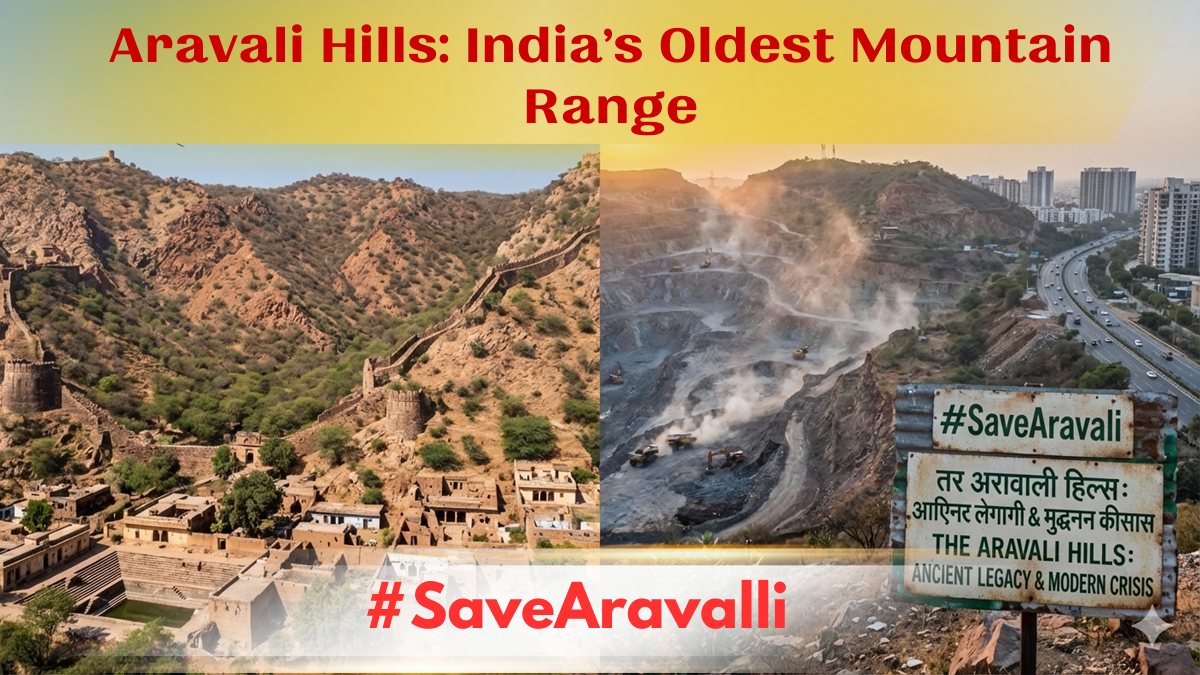
The exploration of the natural resources (mining-quarrying) made the destruction happen more quickly. For years, extraction (both legal and illegal) of stone and mineral resources has resulted in the removal of whole hills and the creation of deep ruts in the land. The extraction has had an effect on all forms of vegetation; the falling water levels in the aquifers, and disruptively changing wildlife movement patterns, many of which are still evident today.
Simultaneously, unregulated tourism exerted a strain on fragile regions like Mount Abu. While tourism provided a means of visibility, the result of poorly-planned construction resulted in depleted water resources, forest cover loss, and disruptions to the natural ecosystem of the area. Rather than concentrating on conserving natural resources, tourism has resulted in more opportunities for exploitation than conservation.
More than physical damage, the Aravallis suffered from policy neglect and cultural amnesia. Viewed as wasteland rather than living heritage, they were excluded from India’s environmental consciousness—until their absence began to be felt through water scarcity, rising heat, and advancing deserts.
The 2025 controversy: A Narrow Definition and a Public Outcry
In late 2025, the Aravallis returned to national attention in a way few conservationists wanted. A recent judicial and administrative shift introduced an elevation-based criterion — essentially a 100-metre threshold — to define what counts legally as “Aravalli hills.” Critics and many scientists argued this semantic change would exclude large swathes of low-lying but ecologically essential land from legal protection and open them to mining, industrial projects, and real estate conversion.
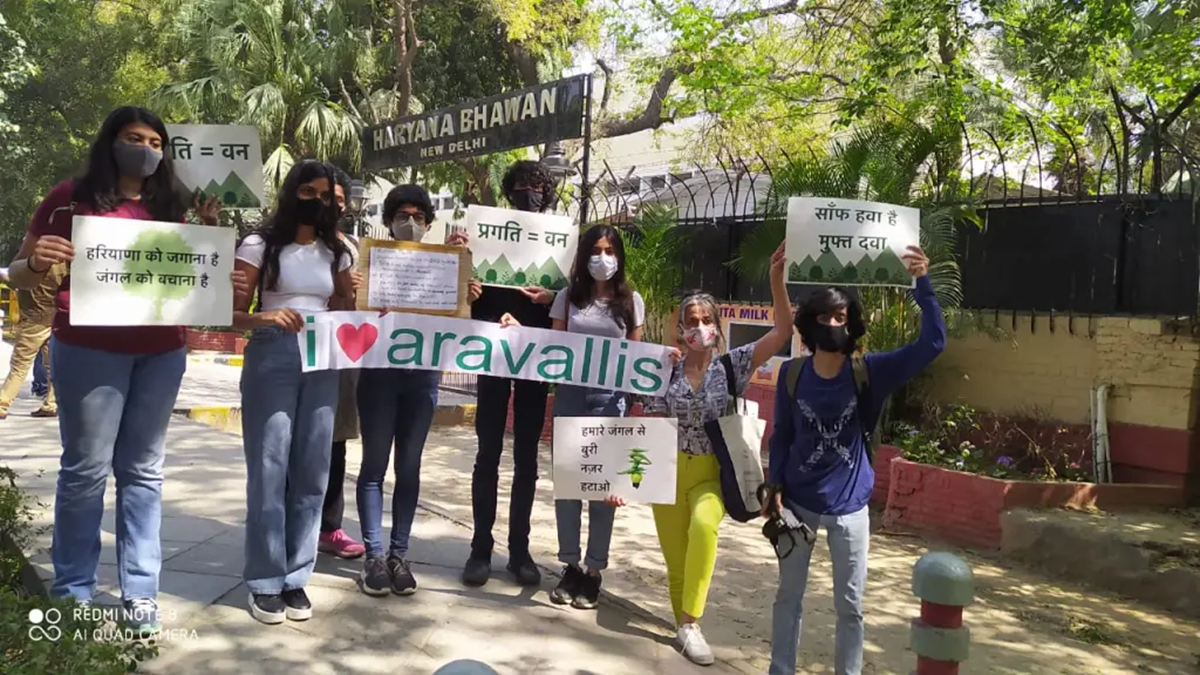
The national response to the redefinition and its ramifications included a large amount of public outcry via social media and public demonstrations. In addition to this, many people participated in campaigns under the hashtag #SaveAravalli, and there were many protests happening from the city of Gurugram, through to Udaipur and Jaipur. Several attorneys, as well as countless environmental organizations, rallied together in order to advocate for these concerns in both the courts and in the public arena. Experts who write on environmental matters continue to express major concerns. It has been warned that the lack of legal protection in areas that provide significant habitat and groundwater recharge functions may lead to ecological consequences far greater than anticipated as a result of the redefinition of what constitutes an “ecologically sensitive area.”
The Ecological community has been very vocal in its condemnation of this. According to them, the ecological absurdity in protecting just the tallest mountains or peaks while allowing the destruction of the lower slopes or plains through quarrying and construction practice is that the lower elevations/slope areas where the mining/quarrying exploitation is focused are paramount to the connection between hydrology and habitat continuity. In reports and media coverage, in December 2025, it was noted that the proposed/effective elevation or area protection standard could destabilize the landscape and groundwater connectivity of a landscape that millions of human beings rely upon.
Simultaneously, courts and high courts demanded clarity on mapping and legal definitions. State authorities were instructed to prepare ground-truth maps and justify classification, a process that has already led to litigation and strong public interest petitions seeking a science-based, ecologically sound approach to defining and protecting the Aravalli landscape.
Government and Civil Responses: The Aravalli Green Wall
Many solutions are being proposed. The Aravalli Green Wall Project by the Central Government, which is based on the “Great Green Wall” concept, intends to restore vast areas of degraded land along the Aravalli Mountain Range, as well as provide communities with opportunities for replanting trees through afforestation, restore water bodies, and to revive degraded physical landforms (e.g., creeks), based on community involvement. The project is an initiative that includes: planting trees with geo-tagging; restoring wetlands through a collaborative effort between communities and state governments; long-term management of the landscape to create healthy ecosystems (i.e., stabilisation of soils, building green cover). But, government officials and conservation groups believe that the restoration of the land through afforestation alone will not replace the natural geological and hydrological conditions, so the components of protecting and sustaining the landforms legally; restrictions on mining in sensitive areas; and managing land use through sustainable practices are necessary.
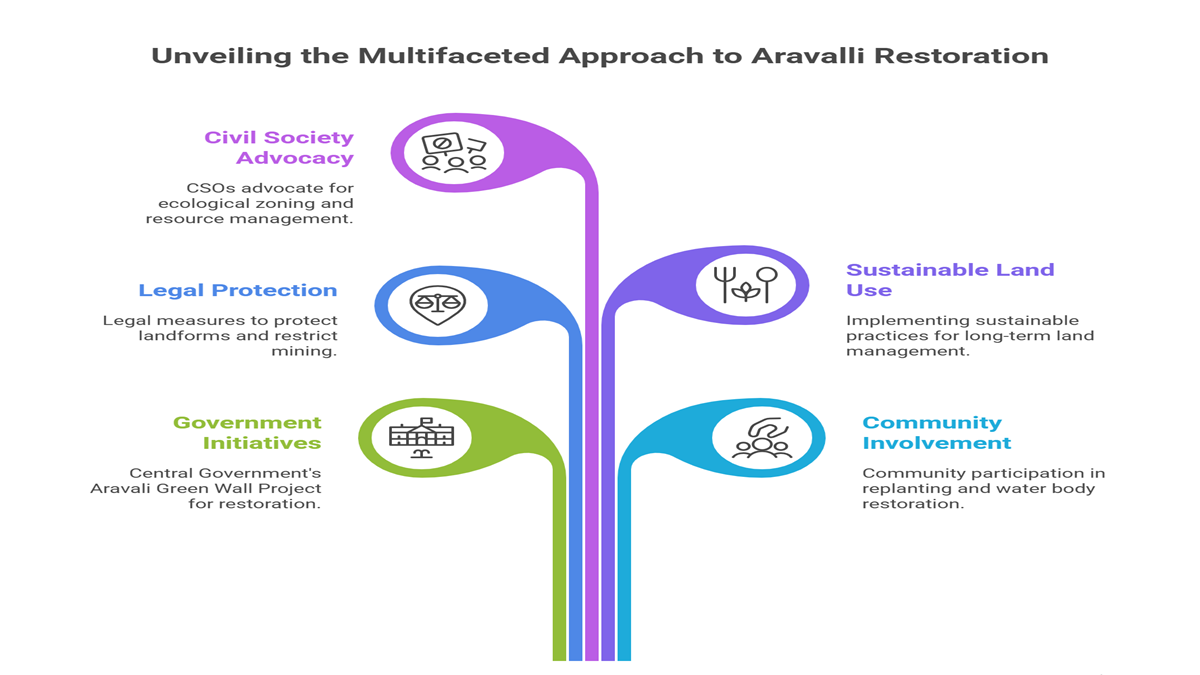
Civil society organizations (CSOs) are also taking part actively in the protection of the Aravallis. Civil society organizations such as NGOs, students, and local communities carry out awareness-building campaigns; bring cases to court; and advocate for ecological zoning of the Aravallis based on their functional landscape rather than on their narrow topographical definition. These concerned groups advocate for a precautionary, science-based approach that accounts for the interconnectedness of geological formations, recharge functions, and wildlife corridors, among other resource management criteria.
Voices from the ground
The best indication of what is being lost can be found in the lives of those who populate the hillsides. Farmers along the margins of the Aravalli describe wells that used to replenish after monsoon rains, but now they have either run dry or have produced little water since heavy quarrying began in the vicinity. Residents of forests speak about summers becoming hotter and winters losing their earlier coolness. Activists and researchers have illustrated with satellite images how large portions of hills have been removed and how this has led to significant decreases in groundwater levels around the area.
What Sensible Protection Looks Like
If the Aravallis are to survive as functioning landscapes, action must be multipronged:
- Science-based mapping and legal protection: Definitions should be based on geological continuity, hydrological function, and ecological connectivity — not only on a single height cutoff. Courts and planners need maps that integrate geology, groundwater recharge zones, and biodiversity data.
- Stop indiscriminate mining: Tighten enforcement against illegal quarrying and rework mining policies so extraction does not undermine recharge zones and habitats.
- Restore degraded landscapes: Afforestation and wetland restoration under projects like the Aravalli Green Wall should prioritize native species, soil restoration, and community stewardship.
- Sustainable urban planning: Cities in the Aravalli footprint must commit to green buffers, regulated extraction bans, and water-sensitive urban design to reduce pressure on adjacent hills.
- Community rights and stewardship: Local communities should be central partners; livelihood alternatives, eco-tourism, and participatory afforestation create incentives for protection.
Why the Aravalis Matter to Every Indian
The Aravalli Range is not just a landlord on a desert; it’s considered to be a part of the National Ecological Safety Net. The Aravalli and its associated ecosystems have direct relevance to the issues of air and dust in Delhi, as well as the Water Security of many people living in Delhi, Haryana, and Rajasthan, and the Climate Resilience of both Farm and City Systems. Both the narrow legal definitions of the Aravalli Ecosystems and the conversion of the land to be developed for Immediate Use are only beneficial to a few persons in the short term, while the thousands of millions of people who will have to suffer from the Long Term Impacts will pay the Price.
Heritage, Commons, and Choices
Geologically, culturally, and ecologically, the Aravali Range represents much more than an image to be exhibited in museums today; these formations still support urban and agricultural societies through many interrelated processes. The issue raised in 2025 regarding the preservation of this region highlights how conservation does not simply arise from a past desire for reflection or appreciation, but that choices made today exert potentially significant and lasting impacts on future social, environmental, and economic well-being.
If India wishes to create resilient cities, ensure secure water resources, and safeguard a living heritage, the clear choice is to protect the Aravalli hills as landscapes and not only as mountain ranges. The fundamental tenets of effective conservation are legal definition, scientific orientation, and accurate representation of the Aravali hills on the ground by an engaged and caring local community. The time for action is now; After billions of years of waiting for the right time, the Aravalli hills deserve more than to be destroyed by a temporary policy choice.



Subscribe Our YouTube Channel: https://www.youtube.com/@BhartiSanskriti-BS