
Table of Contents
Content
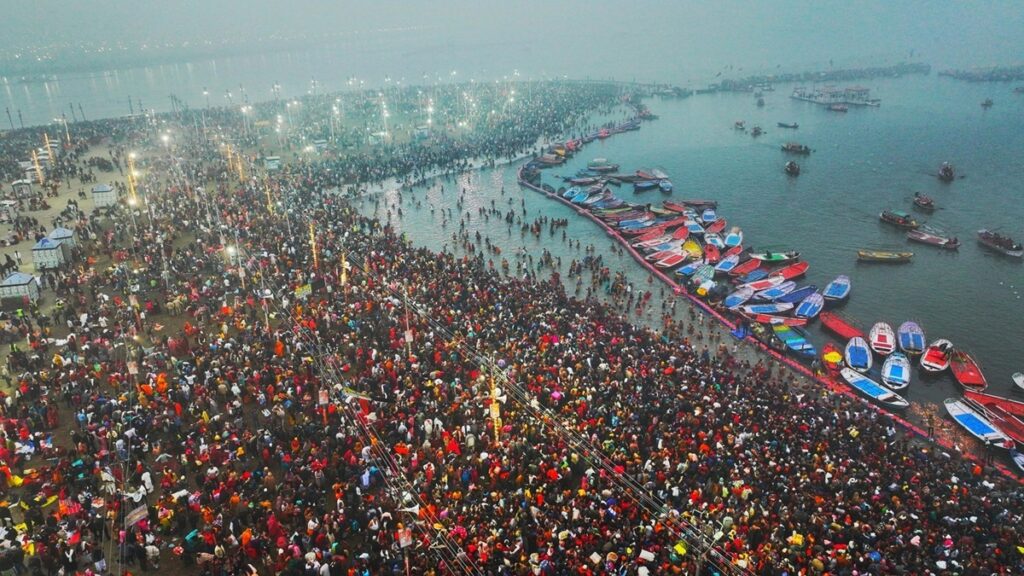
Gaya Ji, the archetypal city in Bihar, is one of the most important spiritual sites in India and is called Moksha Bhoomi, or the land of salvation. Each year, during the magic of Pitru Paksha, Gaya Ji explodes into a spectacular infusion of faith, tradition, and devotion every year, as millions of pilgrims flock to the annual Pitru Paksha Mela, where millions gather for the renowned shrine to the deceased. This religious event represents one of the oldest and most significant expressions of piety and duty to our ancestors; the living honour the dead; the dead transition through various ancient rituals, which are believed to confer moksha (liberation) on the souls of the deceased.
The Pitru Paksha Mela of Gaya Ji is uniquely important within the Hindu framework and functions as the ritual center for pind daan in Gaya Ji ceremonies that lead to the spiritual liberation of ancestors. Gaya Ji is the only pilgrimage destination that offers the assurance, that just by being in the vicinity of Gaya, ceremonies will literally free souls from the cycle of death and rebirth. Therefore, Gaya Ji is an essential spiritual journey for millions of families across the planet.
Historical Background: Legends Etched in Sacred Geography
The mythological origins of sacredness surrounding Gaya Dham stem from the primordial story of Gayasura, a mighty demon who performed such great austerity that he was granted a boon from the gods. The early texts, such as the Vishnu Purana and the Vayu Purana, state that Gayasura’s body became so pure through intense spiritual practice, that whoever merely touched him would be instantly liberated from the cycle of birth and death. Unfettered access to moksha created chaos in the cosmos, and therefore, Lord Vishnu had to step in to alter this condition.
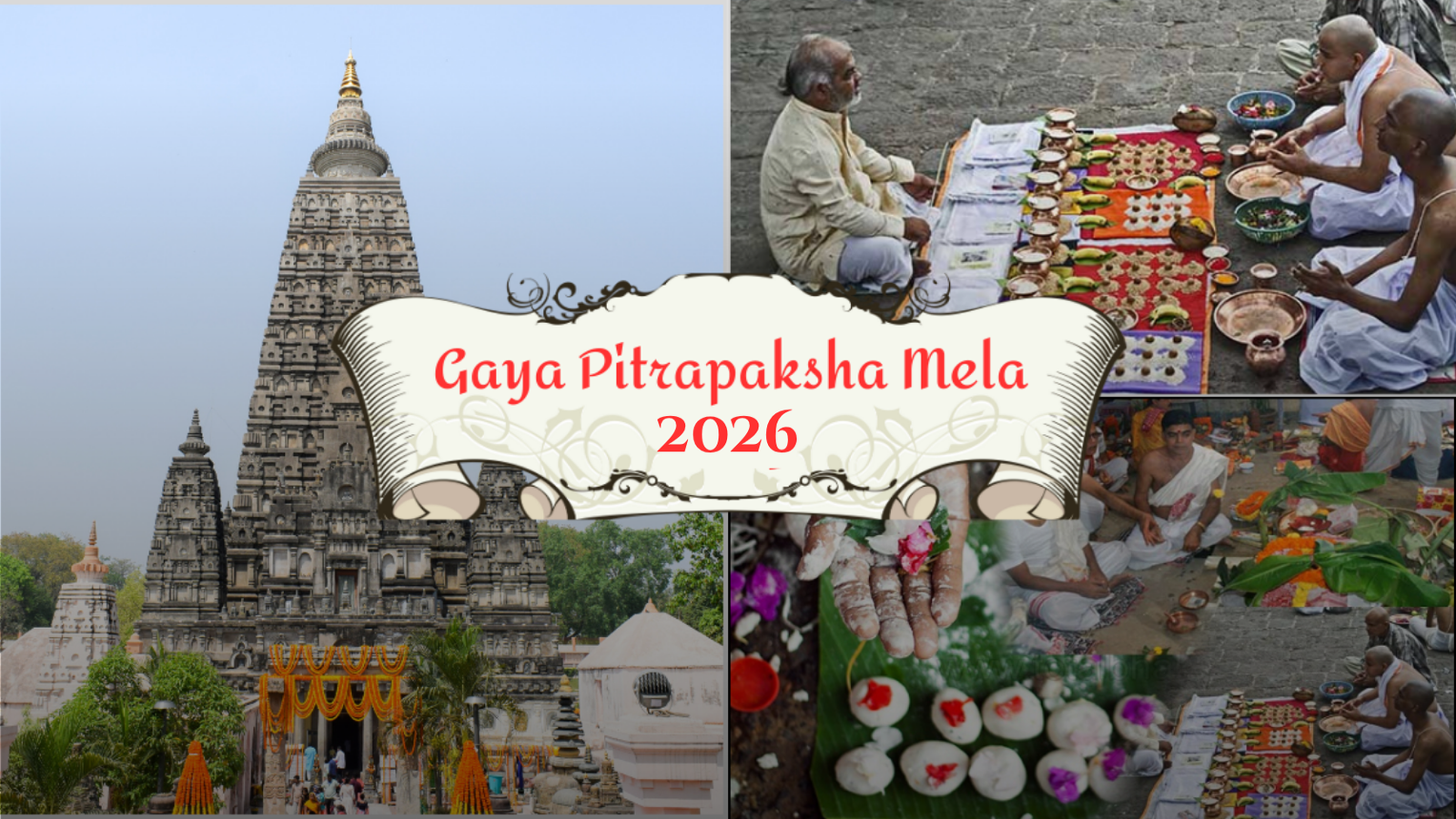
The myth goes on to state that, in order to confine Gayasura, Lord Vishnu foot pressed him under the ground, and as a permanent testament to the event, left his divine footprint. This magnificent imprint can still be seen today at the Vishnupad Temple in Gaya Ji. This sacred footprint is approximately 40 centimeters long and has nine representations of the divine, known as “shri”, including Shankha, Chakra, Gada, and others. The footprint serves as the center of the temple that was built by the Maharani Ahilyabai Holkar in 1787.
The historical importance deepens through citations in the great epics, especially the Ramayana. When Lord Rama conducted pinda pradanam in Gaya Ji for his father, King Dasharatha, at the banks of the Falgu river in Treta Yuga, it established Gaya Ji as the supreme location for performing these ancestral rites, which still evokes enthusiasm over thousands of years later.
The Sacred Rituals: Ancient Practices in Modern Times
Pind daan ceremonies, which comprise refined spiritual practices where devotees dedicate rice balls, or pindas, to deceased ancestors, are at the core of the Pitru Paksha Mela. These rituals begin with pilgrims performing ceremonial baths in the sacred Falgu River, and involve Gayawal Pandas (hereditary priests) preparing pindas from rice grain, with sesame seeds and sanctified water.
The Gaya pind daan ritual process occurs at several sacred sites in Gaya Ji, such as the Vishnupad Temple, the banks of the Falgu River, and the Akshayavat tree, which is said to be immortal in nature. In order for the ritual to work safely and effectively, the pilgrim must visit the three core sites for pitru puja: the Vishnupad Temple, where Lord Vishnu’s footprint is said to bless and sanctify the proceedings; the sacred Falgu River, where a special ritual is performed in offering tarpan (water oblation); and the Akshayavat tree, where blessings are sought.
The traditional pinda pradanam in Gaya takes place in a meticulously specified sequence and is designed for the devotees to first and foremost purify themselves through ritual bathing, only then to prepare offerings, under the guidance of priests, and finally present innocents and chant names and gotras of ancestors. This ancient practice allows for the spiritual benefit to flow to the correct souls and fulfill the sacred covenant between the living to make an offering to the deceased.
The Falgu River carries its own captivating mythological story that has it cursed by Goddess Sita to flow mostly underground except during monsoons. Despite this curse, the river is considered highly holy for performing ancestor-related rituals (pind daan in Gaya Ji), which would often have pilgrims dig shallow holes at the sandy bank of the river to utilize the holy water for the rituals. This distinction adds mystical meaning to the rituals, being both symbolically deep and hidden in the spiritual devotion that is needed for fulfilling the rites of liberation for one’s ancestors.
The Magnificent Mela: Scale and Organization
The Pitru Paksha Mela 2026 began truly on September 26 and will continue through October 10, two weeks that are dedicated to honoring one’s ancestors and spiritual performance. This year’s pilgrimage is expected to be larger than last year’s. After the town recorded a tremendous influx of over 34 lakh devotees in 2025, government authorities forecast that this year the number of pilgrims will peak at over 16 lakh, while the total number of tourists from India and other countries will reach 50 lakh.
It takes high-end administrative accuracy to deal with huge crowds. The government of Bihar, led by District Magistrate Shashank Shubhankar, has divided the mela into 17 super zones, 43 zones, and 324 sectors, and has stationed 324 sector officers in the region to facilitate the movement of visitors at the important ghats and temple passages. In terms of accommodation facilities for the pilgrims, the government has made arrangements for 64 types of government accommodations where 18,000 people can be accommodated, a modern Tent City at Gandhi Maidan that can accommodate 2,500 people, 126 hotels, and 527 traditional accommodations for the Pandas.
Gaya Ji’s thriving network of older dharamshalas, new hotels, and government-funded tent cities caters to the accommodation needs of all budgets of travelers participating in the culturally significant pitru puja (funeral/ancestor worship). Among all options, dharamshalas are the prime and preferred choice of senior citizens and affluent family groups desiring traditional and spiritual accommodation options located close to Vishnupad Temple as well as the Falgu River.
This festival has a significant impact on the economy. Building on the figures of previous occasions, where local sales surpassed ₹20 crore, this mela creates an overwhelming need for local vendors selling metal vessels, brass items, sesame seeds, etc. Since the hotels are nearly full during the whole festival, the cost is between ₹3,000 and ₹4,500 per night for the customers.
Cultural and Social Dimensions: Unity in Diversity
Functioning as a splendid cultural melting pot, the Pitru Paksha Mela draws pilgrims who come from different regions, language groups, and social backgrounds, all sharing a similar spiritual intent of the Gaya pitru puja. Most of the pilgrims come from the states of Madhya Pradesh, Maharashtra, Gujarat, and Haryana, and each person brings their own cultural practices and traditions; even while participating in an overall universal practice that reveres their ancestors.
This gathering is more than an act of devotion, but a symbol of cultural continuity in India, and the relationships we maintain with our family, after they have crossed over to the other side. The presence of international pilgrims strongly emphasizes Gaya’s importance as a spiritual destination, with Buddhist pilgrims making the journey down the road to Bodh Gaya, a UNESCO World Heritage site, the location where Buddha achieved enlightenment
The mela plays a key role in the religious tourism industry for Bihar, making Gaya Ji an exceptional pilgrimage site with new facilities and ancient precedence. The inclusion of cultural programs, religious discourse, and bhajan-pravachan sessions during the mela serves to enhance visitors’ spirituality whilst continuing the use of traditional arts and religious instruction.
Modern Relevance and Technological Integration
The current structure of the Pitru Paksha Mela reflects a successful melding of age-old spiritual practices with the demands of modern administration and organization. New mobile applications, such as “Pinddan Gaya,” offer pilgrims the ability to digitally register and receive information as necessary, while an LED screen relief at every rail platform is on hand to provide arrivals with real-time updates.

The government employed progressive crowd management tools including, but not limited to, a monitoring system employing CCTV, a matching system for special trains set to transport visitors to and from the site based on multiple large cities, and a fully-staffed health care center with emergency response teams fully trained and ready to assist. Water Resources Minister Vijay Kumar Choudhary announced another welcome addition to religious occasions, the free distribution of Gangajal (the sacred water of the Ganges) for pilgrims to collect, adding a different, modern, secure sense of spirituality, but explicitly supporting and demonstrating governmental involvement with local rituals and religious traditions.
Special arrangements include the deployment of 450 teachers to provide pilgrim support at the various help centers, SDRF teams with diving equipment for monitoring water safety, and barrier-free accessibility arrangements for folks with different abilities. Many dharamshalas in Gaya have also been upgraded with modern amenities while maintaining their traditional spiritual atmosphere. These modernizations will ensure that ancient traditions continue to thrive in modern times with their spiritual faith intact.
Challenges and Conservation Efforts
The influx of millions of pilgrims poses heavy infrastructural and environmental burdens on the urban fabric of Gaya. The pressure on the Falgu River, the Vishnupad Temple complex, and the surrounding areas needs to be addressed with concern for both visitor accommodation and protection of heritage.
The challenge of crowding is paramount, particularly between the hours of 4 AM to noon, when ideally 40,000-50,000 pilgrim visitors are performing their rituals across the ghats and temples. The administrative solution for this is to address the management of queues, provide defined entrance/exit routes, and allot times for temple visits.
Environmental issues are false waste disposal of pind daan material, water conservation in the Falgu River, and the ancient temples (mounds) site from heavy tourist foot traffic. Local and federal governments have implemented regular domestic waste removal of mounds, residential dumping, waste segregation, as well as conservation measures to protect the site’s archaeological and spiritual integrity while ensuring the smooth conduct of pinda pradanam in Gaya Ji.
Eternal Bridge Between Memory and Moksha
The Pitru Paksha Mela in Gaya Ji epitomizes the strongest form of intergenerational devotion throughout all of humanity, as the living relate to the dead through sacred Gaya pitru puja rites that have taken place for thousands of years. The mela is not simply a religious event but indicates the timelessness of the human desire for spiritual continuity and the liberation of ancestors.
As families travel from around the world to complete these long-held rites, Gaya lives on as the eternal bridge between memory and moksha, allowing traditional professed values of filial devotion to coexist in an ever-changing world. The lasting value of the Pitra Paksha Mela, however, is not limited to the promise of salvation for ancestors; it unites people in the common experience of love, loss, and hope for spiritual transcendence.
By both uniting ancient wisdom with a modern organization, the Pitru Paksha Mela of Gaya Ji is a unique spiritual location that gives seekers the somewhat rare guarantee that their acts of devotion will, in fact, provide peace and release to cherished ancestors and therefore fulfill the sacred debt owed to all ancestors by every soul.

Subscribe Our Youtube Channel: https://www.youtube.com/@BhartiSanskriti-BS