

Jain pilgrimage town Pawapuri/Pavapuri, located in Nalanda district of Bihar (India), has been an integral part of the tradition of Jainism for hundreds of years; as such, this quiet little town draws Jain pilgrims from all areas of the subcontinent because it represents where Lord Mahavira—the 24th Tirthankara of Jainism—attained moksha (the final step in achieving spiritual liberation). In addition to being one of the most visited Jain pilgrimage towns, there is so much more to Pawpuri beyond this historical significance; it is an experience of tranquillity, simplicity, and religious architecture that encourages you to catch your breath and slow down. When viewing Pawapuri as merely “another temple town,” it misses the whole point of visiting this place—to learn or remember how to be quiet again.
A Place Where History and Silence Meet
Pawapuri is religiously important primarily because it is where Mahavira spent the last years of his life before attaining Mahanirvana. When Mahavira’s body left the physical world, he was cremated on the spot in what is now the sacred pond area. Pawapuri became a sacred place of Jain worship over the centuries as the Śvetāmbara and Digambara sects created and maintained temples, memorials, and simple paths for pilgrims to walk upon and meditate. It is a place where one can sense the history of the area, but only in whispers—not loud and boisterous—through the various footprints left in stone, the relics preserved for more than 2,000 years, and the stillness of the water lapping against the edge of the temple pond.
The Iconic Jal Mandir — Marble Rising from a Lotus Lake
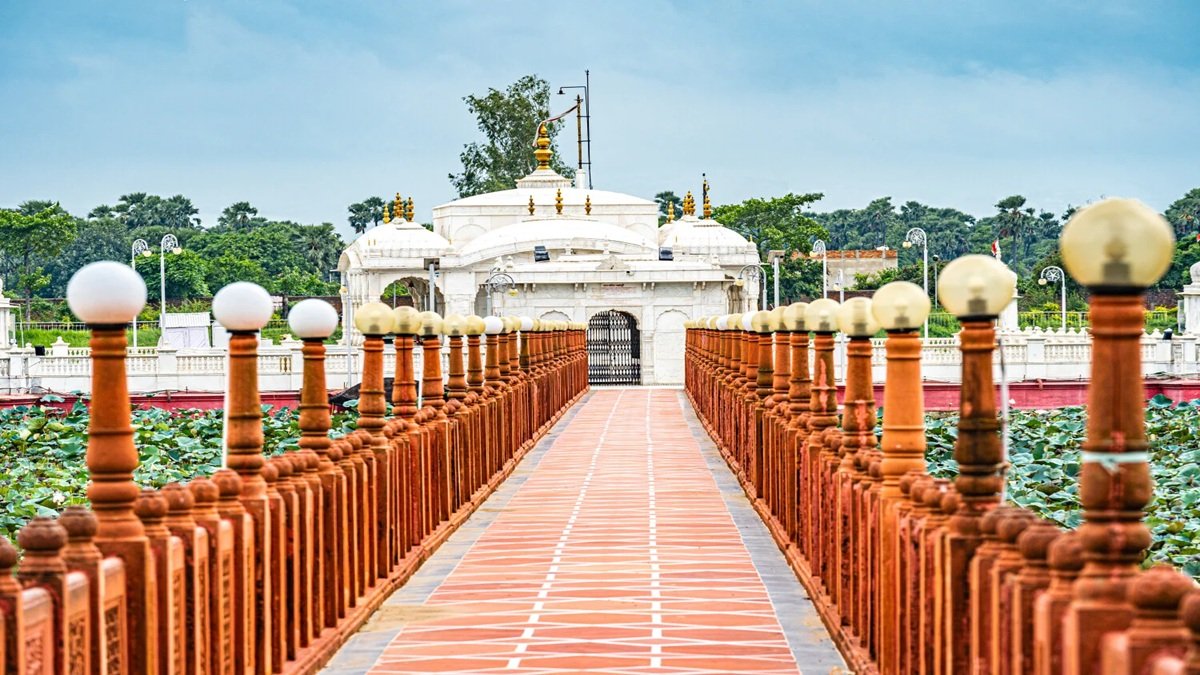
The image most people carry of Pawapuri is the Jal Mandir: a white marble temple that seems to float in the middle of a lotus-filled pond (Kamal Sarovar). The temple, reachable by a long, narrow causeway, houses an idol and marks the site associated with Mahavira’s cremation. The architecture is elegant and deliberately unpretentious—white marble, soft arches, and open verandas that invite quiet sitting and contemplation. Visitors often plan to arrive at dawn or dusk when the pond reflects the temple and the light is soft; the effect is almost meditative. The Pavapuri Jal Mandir’s setting—lotus blooms in summer, migratory birds in winter—helps make the spiritual experience feel woven into nature itself.
More Temples, Each with Its Own Story
Besides Jal Mandir, numerous memorials and temples in this area include Samosharan Temple, Digambara Temple Complex, small shrines to the disciples of Mahāvīra, and locations which house Charan Paduka— footprints of Tirthankaras. Collectively, all buildings complement the full tapestry of Jain symbolism through three different means; exhibiting devotional art, preserving ritual practice, and providing spaces for listening to one another. These collectively provide a complete sensory experience of Jain symbolism through Ahimsa (non-violence), Satya (truth), and the pursuit of Moksha (liberation).
The Atmosphere: Peace Practised, Not Provoked
Pawapuri is not like other, louder pilgrimage sites because of its lack of commercialism surrounding the major religious sites. Instead of lots of commercial activity, you will find clean walking paths and quiet temples where pilgrims sit cross-legged or move slowly through the area. The serenity of the environment reflects the Jain way of life: food is vegetarian, animals and fish are treated humanely (you will see fish still living in ponds), and the focus is on self-purification rather than external displays. Even if you do not identify with Jainism, this town provides an opportunity for quiet reflection on the journey of pilgrimage; therefore, it is an ideal place to reflect on your inner self as well.
Festivals: When the Town Gathers in Quiet Celebration
The festival of Mahavira, which celebrates his Great Nirvana and is associated with Diwali, occurs near Kartik Amavasya when large numbers of pilgrims come to light lamps, offer prayers, and practice rituals that are not usually elaborate. Over the past few years, various government agencies have complemented this holiday by organising the Pawapuri Mahotsav (Nirvana Mahotsav), a religious and cultural celebration featuring both displays related to Mahavira and activities focused on creating an atmosphere that still incorporates contemplation at Pavapuri. If you are visiting during this time, expect more people, but you will also have a lot of opportunities to see traditional practices done in their most genuine form.
Practical Travel Guide: How to Reach and Where to Stay
Pawapuri (Pavapuri) is located within a collection of historical sites in Bihar and is approximately 19 km from Rajgir and approximately 90-100 km from Patna, the capital of Bihar. The closest airport is Patna with Jai Prakash Narayan International Airport. It takes about 2 to 3 hours to get from Patna to Pawapuri by car or taxi, depending on the traffic conditions. If taking a train, travelers typically use either Nalanda or Bihar Sharif as the nearest train stations before proceeding to Pawapuri by road. There are local buses and taxis that run between Rajgir, Nalanda, and Patna to Pawapuri, and once upon reaching Pawapuri, the common modes of transportation would be walking, cycling with a cycle rickshaw, or by auto rickshaw. Pilgrims will find plenty of accommodation in small guesthouses, dharamshalas, and limited-budget hotels; we recommend advance reservations during festival time.
Best Time to Visit
The climate of Pawapuri is the same as many other places throughout much of Eastern India: hot summer, wet monsoon season; cold winter. For optimal comfort and the greatest enjoyment of the area for things such as scenic views (clear skies), gentle mornings, and the lotus flowers in the pond, the best time to visit will be from October to March. It is especially nice during winter to pray at dawn (due to quietness) and take long reflective walks (due to excellent weather). You should try to visit during the non-monsoon season to ensure that the pathways remain dry and you can walk easily.
Read More👉: Sonpur Mela, Evolution of Indian Script
What to Do (Beyond the Photo)
- Walk the causeway to Jal Mandir: Move slowly. Sit in the marble veranda and watch the light change on the water.
- Observe ritual with respect: You’ll see pilgrims offering flowers, lamps, and quiet prayers—watch and learn.
- Visit the Samosharan and Digambara complexes: They offer complementary styles of devotion and architecture.
- Try local vegetarian cuisine: Simple, sattvic meals are the norm; ask for Jain-style preparations if you prefer no root vegetables or certain spices.
- Combine Pawapuri with Nalanda and Rajgir: These sites make for a spiritually dense, culturally rich circuit.
These activities keep the visit gentle and meaningful—centred on observation and internal stillness rather than ticking off tourist attractions.
Respectful Etiquette for First-Time Visitors
Pawapuri rewards visitors who come with curiosity and humility. A few practical pointers:
- Dress modestly—covered shoulders and knees are a simple sign of respect.
- Remove shoes before entering temple precincts.
- Keep voices low; many come specifically seeking silence.
- Photography rules vary—ask before photographing inside shrines or worshippers.
- If offered prasadam (sanctified food), accept respectfully; if you have dietary restrictions, clarify politely.
- Avoid harming fish or animals; the pond’s life is part of the sacred ecology here.
These small acts of courtesy help maintain the town’s atmosphere and will be appreciated by local devotees. (No citation needed — general cultural etiquette.)
Why Pawapuri Matters—Even if You’re Not Jain
Pawapuri attracts more than just people with faith. It’s an example of how a vibrant faith-based tradition maintains its commemorative, experiential places of worship, while avoiding turning them into museums. For students of faith, Pawapuri (Pavapuri) is a small lesson on the Jain view of liberation; for photographers, it is one or more stunning images taken at dawn or dusk; and for people who are bombarded by the fast-paced world we live in, Pawapuri contains a hidden remedy: a town that has organized its environment to promote tranquility. Its buildings, rituals, and surroundings are purposefully designed to teach pilgrims about the importance of education through solitude.
Final Thoughts: A Short Pilgrimage, A Lasting Pause
When you travel to Pawapuri, do not expect it to be as visually stunning; however, come expecting something much different within yourself: an inward awareness. Allocate time to sit by the water, examine the flower closely, and allow the simplicity of Pawapuri to clear your mind. With today’s consumer-oriented travel habits, there are very few places to go in this world that are anything but consumer-oriented. Pawapuri offers an opportunity for people to slow down, meditate on who they are, and have an experience that is much quieter than most souvenirs they would normally take home. If you are looking for history, faith, or beauty—in addition to regaining ties with yourself—then, in many ways, Pawapuri will remind you that peace is both an activity and sometimes it is simply geography.




Subscribe to our YouTube Channel: https://www.youtube.com/@BhartiSanskriti-BS